On prizes and poetry
December 13, 2010
‘I had rather be a kitten and cry mew Than one of these same metre ballad-mongers’ (Shakespeare, Henry IV part 1)

Poetry long ago lost its place as the most respected form of writing in our society; poets may be the legislators of the soul, but the number of souls within poetry’s jurisdiction is comparatively small. You write poems, and you hope they make someone’s mind quake a little, or at least experience a bit of a shadowy quiver. Poets are become the sherbet of the soul, it seems, if not the fruit tingles. (Fruit Frisson, anyone?)
Prizes for poetry are important in that they show that (a) at least one other person has read your work and (b) they liked it. To be selected for an award judged by a ‘panel of experts’, all of whom must have preferences and peccadilloes (or armatures and armadillos) is sweet, as it means that your idiosyncratic words have touched more than one mind; perhaps even surprised people into forgetting that they are working their way through a pile of poetry taller than the average skyscraper.
I just heard that I have been awarded a prize called the David Campbell Prize (shared with another poet called Robyn Lance) administered by ArtsACT . The poem, called ‘Visitation’ was very bleak indeed; a mediated response to stories that we read in the newspapers of parents who kill their children, stories which can haunt the reader for days. I wanted to haunt the reader in the same way, to move well beyond sherbet.
Winning a prize for such a poem conjures forth ambiguous reactions: nothing could be further from my mind when I was working on the piece than the concept of winning. Writing a poem about the murder of children to win a prize would be sick indeed. (You’d be worse than a hack ‘ballad-monger’, regardless of whether the poem rhymed or not.) But I am glad that a poem on a subject outside the usual palette of subject matter won the prize.
More poetic ornithology
November 23, 2010
The poem ‘Currawongs’ below was recently highly commended in the Ipswich Poetry Feast. Incidentally, I just judged the adult sections at the unrelated Cooma Feast of Poetry. Some wonderful poems were entered, making my first foray into judging rewarding but difficult. It’s much easier to write ‘the stuff’ than to judge other people’s.
Seems there’s a lot of word-feasting going on.
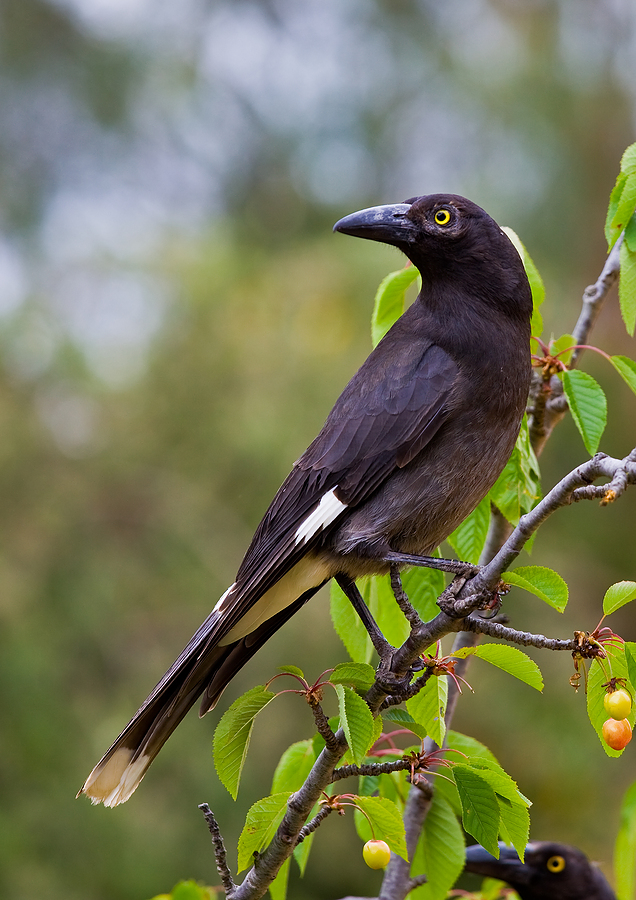
Currawongs
Weaving nets of strong noise in the air,
the electric weft and warp alarming,
they swoop down, direct as any stare.
They are nobody’s favourite bird,
brunching on bright blue wrens
or snacking on smorgasbords
of tenderised olive silvereyes.
They watch us watching them,
estimate our worth, and dismiss us
from their mental menu: Too big,
head too tough to spear with beak.
This is why we dislike these
sharp-gazed moving funerals.
They don’t sing for us, or plume for us,
and reduce us to something at the edge.
Currawongs’ natures know no flattery,
offer nothing to our mountainous vanity.
Beyond cute, below eagle’s sky-high beauty,
they care only for their meat, song and nest.
They tell us that we are not the centre,
the be-all, the crux; the inarguable best.
choppers, fangs, tusks
October 8, 2010
Teeth
Baby teeth parade in neat lines
proclaiming perfect evenness.
Easy equation in which numerator
and denominator meet and greet
over pink board of lisping tongue.
Gummy foundations for architecture
of white, well-placed tiny bricks.
But the gothic develops quickly.
Dark gaps gape like blind eyes
between crooked slates of ambition.
Tooth grows over tooth, bony excess,
lurking doppelgängers of tusk.
Then mouth exorcises milky ghosts
and settles down to grown-up sense,
grinding out a modest lifetime;
our well-worn, skullful suburb of jaw.
Science and Poetry
September 1, 2010
Three poetry books were recently launched containing poems on scientific themes. They are called Law and Impulse (maths and chemistry) Earthly Matters (biology and geology) and Holding Patterns (physics and engineering). The project was called Science Made Marvellous, and organised by the Poets Union Inc as part of National Science Week. All three books were edited by Brook Emery and Victoria Haritos, and the whole project was organised by Carol Jenkins.
I have a poem about Galileo in Holding Patterns and two about the Darwins (Emma and Charles) in Earthly Matters. As an innumerate, I found the fact that I have a poem in the physics and engineering book more than funny.
For a limited time the books can be also downloaded as free PDFs from the Poets Union website at http://www.poetsunion.com/node/806 . (Sorry, you’ll have to copy and paste.)
Here’s my Galileo poem to whet (or blunt) your appetite.
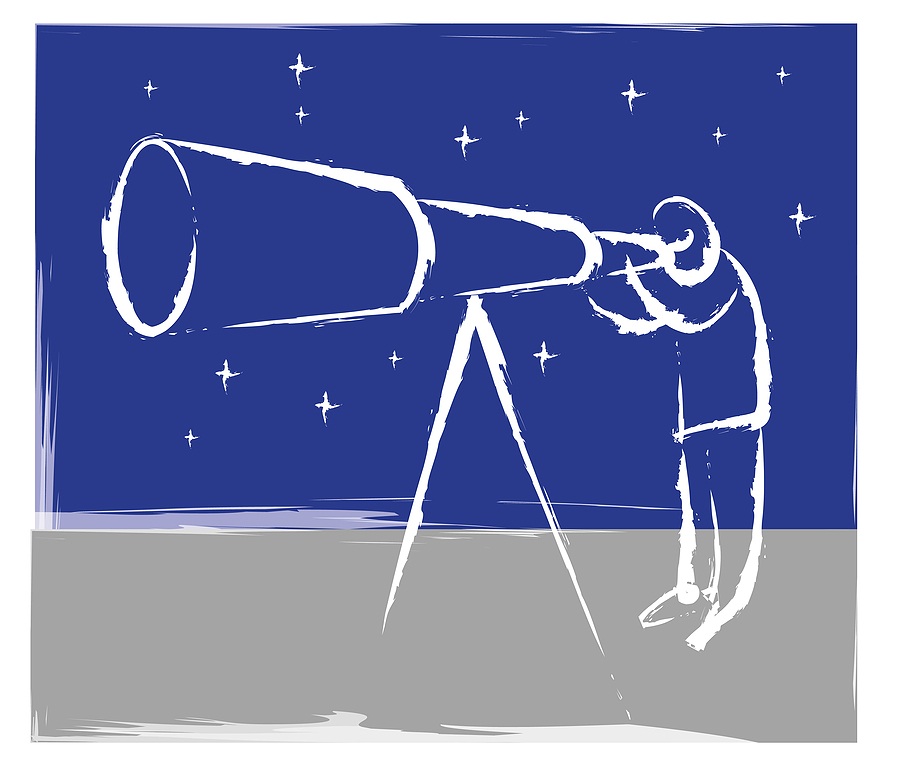
Galileo’s dance
Liquid turned hard, glass turned to heaven
and you saw that we must be mutable;
changed the rock sure eye of earth
into a speck, one amongst the masses,
all moving. They locked you down,
house-bound, a threat to galactic security;
to a solidity that had already mutated,
as they might have melted you on fire,
a terrorist of unrepentant reason.
So silly to say you were a still centre
from which ideas flowed. No, no,
you went far further; questioning the
questioner’s position, pulling security
blankets away from under fatty,
fixated minds of certainty.
Focusing,
describing detail,
you precisely put an end
to the lie that we are the answer to all.
Others would follow in the ark of wonder;
Charles waltzing hand in hand with Albert;
broad ramp providing access to genius
on wheels. Moving, always moving,
accelerating now in race-track science,
or rockets sifting star-flour for other, further Earths.
But you, with your glass, your eyes,
your paints, you showed the way.
Your gravity can still be detected,
for four hundred years is barely a blink,
a twitch in this dance without choreography.
Swinging on, we too shift, stare, move and parry
and recall long leaps first performed in Tuscany.
P.S. Cottier
Modern Jesus
August 5, 2010
Ten moments in the life of modern Jesus
1. At the bowls club, selling raffle tickets;
2. Not voting for blustery Christians;
3. Trying to eat vegetarian (locusts were never much chop);
4. Sipping light beer and saying it’s just as good;
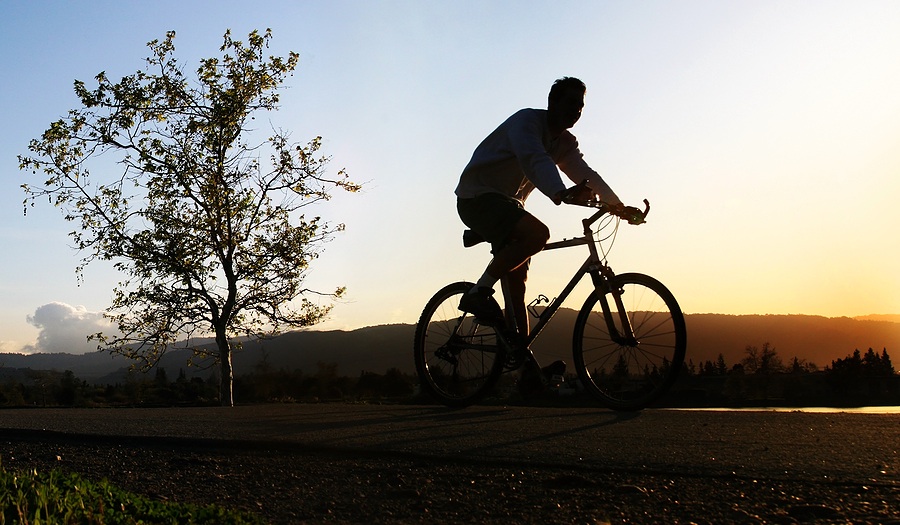
5. Riding his bike (unless delivering meals);
6. Going Anglican to hear the chicks (vocational guidance systems lock on all sorts);
7. Walking the dogs on Canberra winter mornings (but not always picking up poo);
8. Buying The Big Issue and reading it;
9. Studying obituary column poetry and not even thinking of laughing;
10. Making sure that widows and widowers win the chook raffle (see 1 above) and sharing the meal (despite 3 above).
P.S. Cottier
 PS Cottier