Poem: The Angel of the North is pissed off
August 4, 2025
Stretching those flat brown wings
it regards the wattle, sings
its songs from Tyne and Wear
wonders how things are up there
and how it came to Canberra
in the wrong hemisphere, a
flight of seventeen thousand k.m.
and whether it’ll wing home again?
away from pesky cockatoos
and a sky too often unmarked blue
with insufficient sludge and rain,
and heat to fry a maquette’s brain.
It spits copper spit from unseen mouth.
Poor Angel! To be transported South.
PS Cottier
A bit of silliness for this week.
A maquette of the Angel of the North stands in the sculpture garden of the National Gallery of Australia, Canberra. The poem is unseasonal, as it’s very cold in Canberra at the moment, much colder than where the big angel spreads its wings.
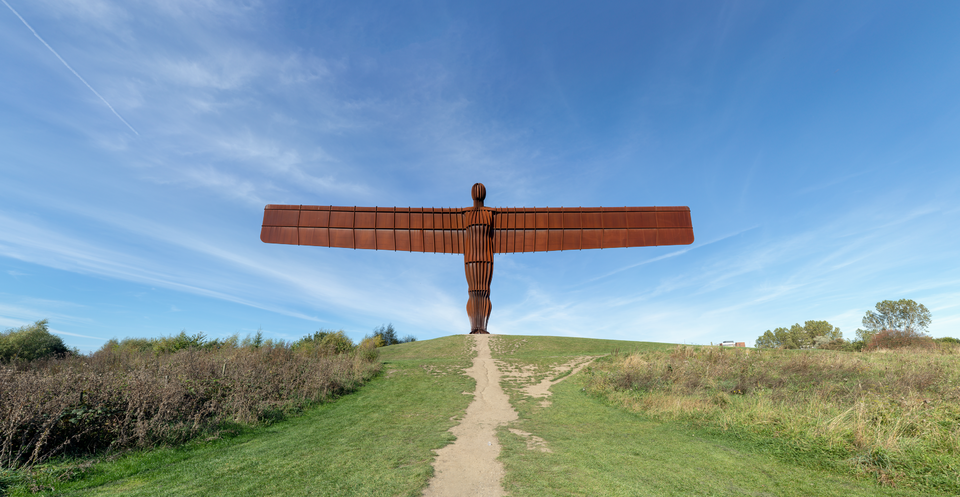
Photo by Picnicin. Creative Commons Zero, Public Domain Dedication
Reviews and sniffer dogs
November 18, 2024
The Thirty-One Legs of Vladimir Putin has attracted some thoughtful and positive reviews.
Firstly at Compulsive Reader, where Magdalena Ball wrote the first review of the book. She calls it ‘quirky and strangely haunting’. Secondly, at The Australian. This one is behind a paywall, but the reviewer, Jack Marx, uses phrases like ‘so unusually brilliant’ and states that ‘There is not a bad chapter in The Thirty-One Legs of Vladimir Putin, and a delight of some sort – usually many – on every page.’ It’s enough to make an author blush! Seriously.
In other news, a poem I entered in The Thunderbolt Prize for Crime Writing was commended, which is great. I am working on a short manuscript about dogs, and the poem was about sniffer dogs. You can read the winners here. And here is my poem. And a dog.

Ardent nose

We sniff our way through violence,
the dropped hat or jeans removed,
splatters on grass, the blood-crumbs,
we call them among ourselves.
Some of us disinter computers containing
hidden quests for poisonous feasts.
Here a soupçon of arsenic, there
a sprinkle of fentanyl, adding spice,
designed to remove a troublesome life.
Recipes rarely handed down.

Others detect stashes of drugs,
or cash converted from same,
secreted behind hasty plaster walls.
Our indications cause such a havoc
of mattocks, a stucco snowstorm.
We are taken outside, in case we eat
those attractive disentombed baggies
neatly counted into incriminating piles,
photographed and fussed over.

We’d rather be out after truffles,
chase sticks and toys, roll in dung,
but we sense delight when we unearth
what your dodgy senses cannot catch.
Your poor excuses for olfaction
are unable to detect screams of scent
slapping the face of the air.
My friend, the springer spaniel,
trained from a floppy ball of pup,
all long hair, tongue and wag,
tastes the cadaver air, helps reveal
the buried answer to a search —
for don’t all dogs love bones?

Long before your Poirots or Bosches,
your Holmes after that fog-bound hound,
we sleuths found what you could not find,
found the worst of humankind.

We barked, or sat, and simply waited
for you to finally catch us up.

PS Cottier

Note: The word sleuth derives from slough dog or sleuth-hound, a bloodhound once found in Scotland.
Poem: All praise the cut-off gloves
June 29, 2024
In cut-off gloves I can cup
my phone; the oblong light,
and message and swipe
just as I would with only
pale thin gloves of skin.
The poetry anthology,
just arrived from Adelaide,
can be flicked in cut-off gloves.
The flat white slowly sipped,
the essential bling displayed
on cool growths of fingers.
Those crops of pink asparagus,
embedded in the cut-off gloves
sprout towards the glowing words,
etiolated, and punctuated
by the warming medium
in which I plant them.
This very poem can be written
in what it seeks to praise —
woollen, orange, cut-off gloves.
And stuff these Canberra days.
PS Cottier

I know that the image doesn’t really fit the poem, but I like it so much that I had to use it. This is an old poem, from 2016, first published at Project 365 + 1 (Project 366), where I wrote a poem a day for 30 days.
I think fingerless gloves are also called Fagins, after Dickens’s character, but the illustrations I found of Fagin did not sport gloves. Here are the gloves to which the poem is addressed:

Tuesday poem: Palm cockatoo
October 9, 2023
Palm cockatoo

Heads like a child's drawing of bird heads,
huge beak and feather mane, flopping,
last extant beat-poet, croaking of things
hep and cool.  Man, you hit bedrock
on that arching drum, selecting the sticks
that give the deepest echo, sound playing
through that tall wooden amplifier,
from dark roots to hazy blowing sky.
You contemplate the waving tops
of tropical trees, plumed angel-head,
stylish in your deep black daytime rhythm.
Inimitable pulsing punctuation,
beaky accent perched above
the forest's bright green flow.
PS Cottier
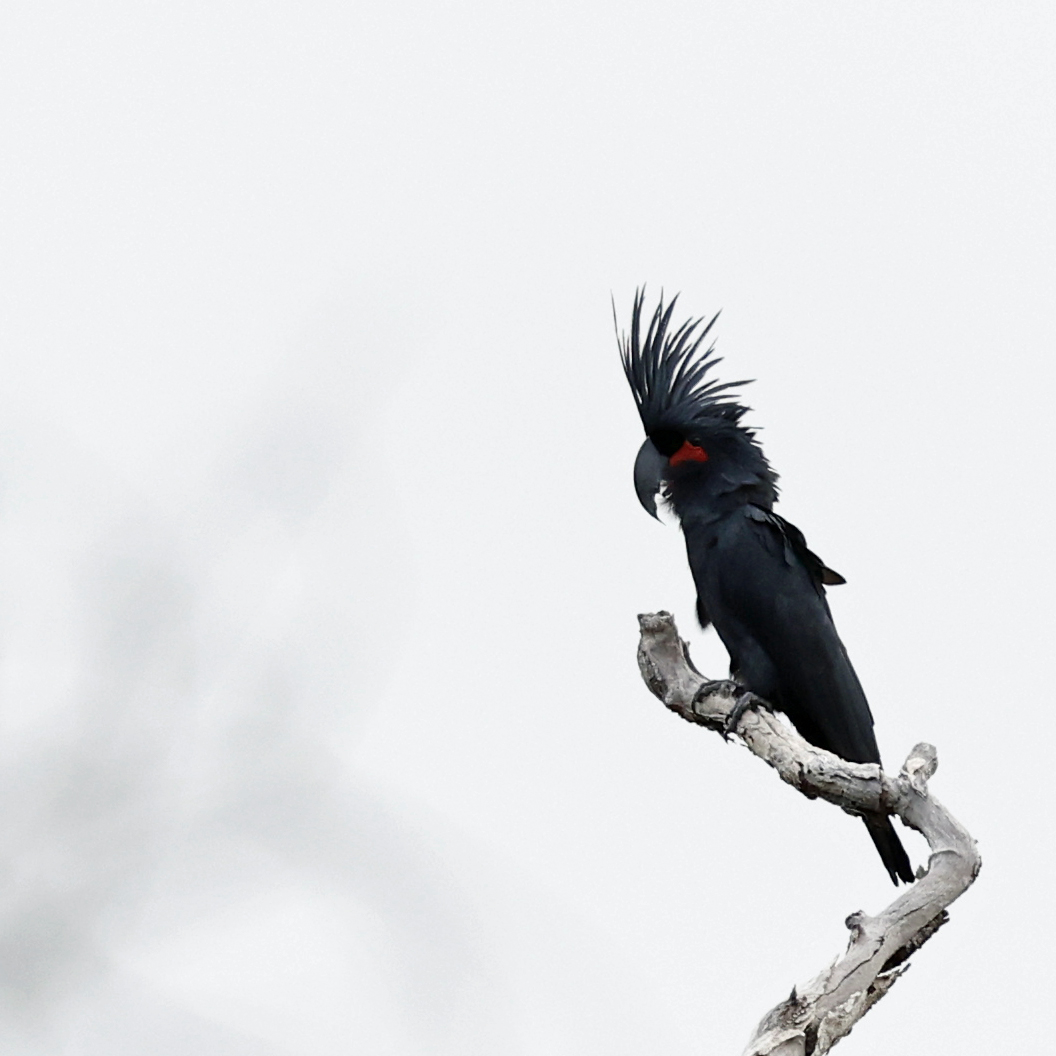
(Image copyright Birdwatching Tropical Australia)
I have posted this poem before, many years ago, however I just saw Palm Cockatoos in the flesh (or feather) for the first time up in Cape York. The male uses sticks to drum on hollow trees, something possibly unique among non-human creatures. (Although we do tend not to see, or hear, things that other species do.) My left shoulder boasts a tattoo of a Palm cockatoo; over ten years since that was inked I saw one.
The photo is of the one we got a good look at; I also saw a couple in flight. We saw Golden-shouldered parrots on the way up, an equally special bird that nests in termite mounds. It is unfortunately one of Australia’s most endangered birds.
The next bird I really want to see is more common. The budgie (the wild one) has always evaded me. I’d love to see a large flock of them in the wild. Occasionally one is seen in Canberra, but they are escapees from aviaries, given away by size and colour, probably wondering where all the seed went.
Tuesday’s Child is Full
October 20, 2022

This is the front cover of my latest book, a collection of poems first published on this very blog. I am particularly delighted with that cover, which relates to one poem inside the book about the Australian White Ibis, or tip turkey.
I have been writing this blog for thirteen years, frequently posting new poems, usually on Tuesdays, hence the book’s name. Thank you to all readers who have followed/commented/read the blog.
The book can be ordered here, from In Case of Emergency Press, which is the best name ever! It is priced at $20 (AUD). Re-reading thirteen years of this blog and selecting the poems was an interesting process, only occasionally bringing on a cringe. Dealing with Howard Firkin, the publisher, was a pleasure.
I will shortly be arranging a launch here in Canberra. Details to follow.
 PS Cottier