Poem: The Angel of the North is pissed off
August 4, 2025
Stretching those flat brown wings
it regards the wattle, sings
its songs from Tyne and Wear
wonders how things are up there
and how it came to Canberra
in the wrong hemisphere, a
flight of seventeen thousand k.m.
and whether it’ll wing home again?
away from pesky cockatoos
and a sky too often unmarked blue
with insufficient sludge and rain,
and heat to fry a maquette’s brain.
It spits copper spit from unseen mouth.
Poor Angel! To be transported South.
PS Cottier
A bit of silliness for this week.
A maquette of the Angel of the North stands in the sculpture garden of the National Gallery of Australia, Canberra. The poem is unseasonal, as it’s very cold in Canberra at the moment, much colder than where the big angel spreads its wings.
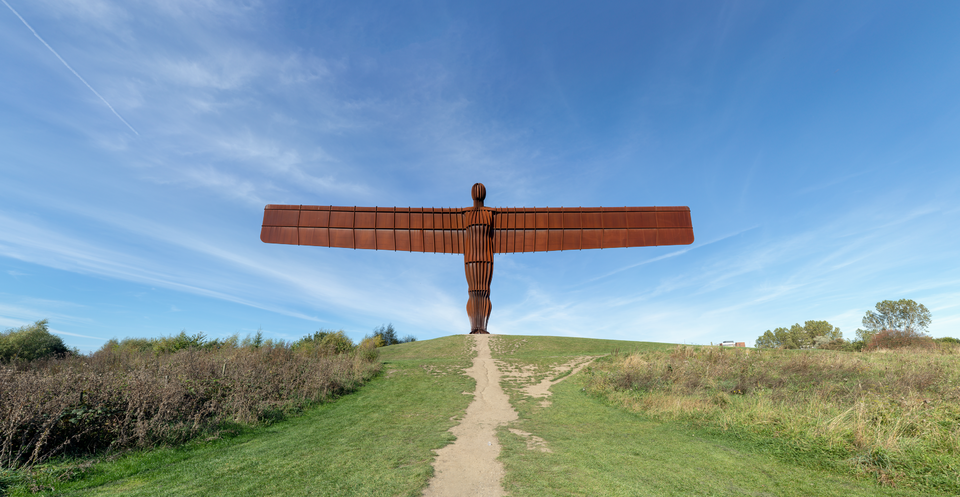
Photo by Picnicin. Creative Commons Zero, Public Domain Dedication
Christmas poem: Burning the donkey
December 22, 2024
We were suspicious from the start.
What decent man brings a wife
pregnant as a pudding
into a new country, unless
he wants the child to be
a kind of hidden penny,
a nice little earner?
She was obviously mad,
whispering something about
a visitation, from behind
an annoying, coy blue veil.
We weren’t sure if she meant
secret police (who are unbelievably
common, in the places these people
supposedly come from,
breeding like cane-toads
in their vivid crops of lies).
She mentioned flashes and wings.
As I said, a few bats short of an attic.
He even admitted that he wasn’t sure
if the kid was his, or at least
that’s what we think he said.
It was hard to source a proper interpreter,
if, indeed, the language was real,
rather than a melange of all things foreign,
stirred like another pudding,
to be tongued off a soon-to-be silver spoon.
Mike said he thought Aramaic
was a perfume for men,
and we all had a good laugh,
but there was absolutely no whiff of that,
I can assure you.
It turned out to be a boy,
born in necessary seclusion,
though Mike said all the lights
turned themselves on
the moment the kid drew breath.
That was undeniably weird,
and a further example
of their lack of thanks
expressed in clever sabotage.
Lawyers even brought in presents,
breaching clear regulations.
Their poor excuse for a boat,
which had evaded all detection
and wound its feral ways to Darwin
despite navy, barnacles, tides and policy,
overladen with stink and sick and
God knows what else,
was towed back out and burnt.
All in all it was nothing remarkable,
although my skin is itching,
itching like an alien.
A nice little souvenir, no doubt about it.
The press should really leave it alone,
and focus on some bigger issues -
a Test begins tomorrow.
PS Cottier

This retelling of the nativity story, set in modern day immigration detention and narrated by a guard, was first published in Verity La in 2017, and later in my book Utterly.
“And so, as Tiny Tim observed, God bless Us, Every One!”
(Illustration by Bartolomé Esteban Murillo)
Between
March 19, 2020
Between
8th March 2020
Women’s T20 final, Melbourne
A perfect night —
the MCG swarming
with yellow and green bees,
flocking and buzzing and singing,
mixed in with an Indian blue.
There, I finally saw
what T20 is good for.
85,000 of us, give or take,
to watch 22 women,
bowling, fielding, swinging.
The cake was iced
as our team lifted the cup.
Then we danced to one Perry —
Ellyse, alas, side-lined,
spectating just like us.
After the fires,
where we couldn’t breathe,
and before the virus
locked so much up,
we sang and yelled and clapped.
Such lively peace between
seeming endless fires,
and a tiny foe, unseen.
PS Cottier
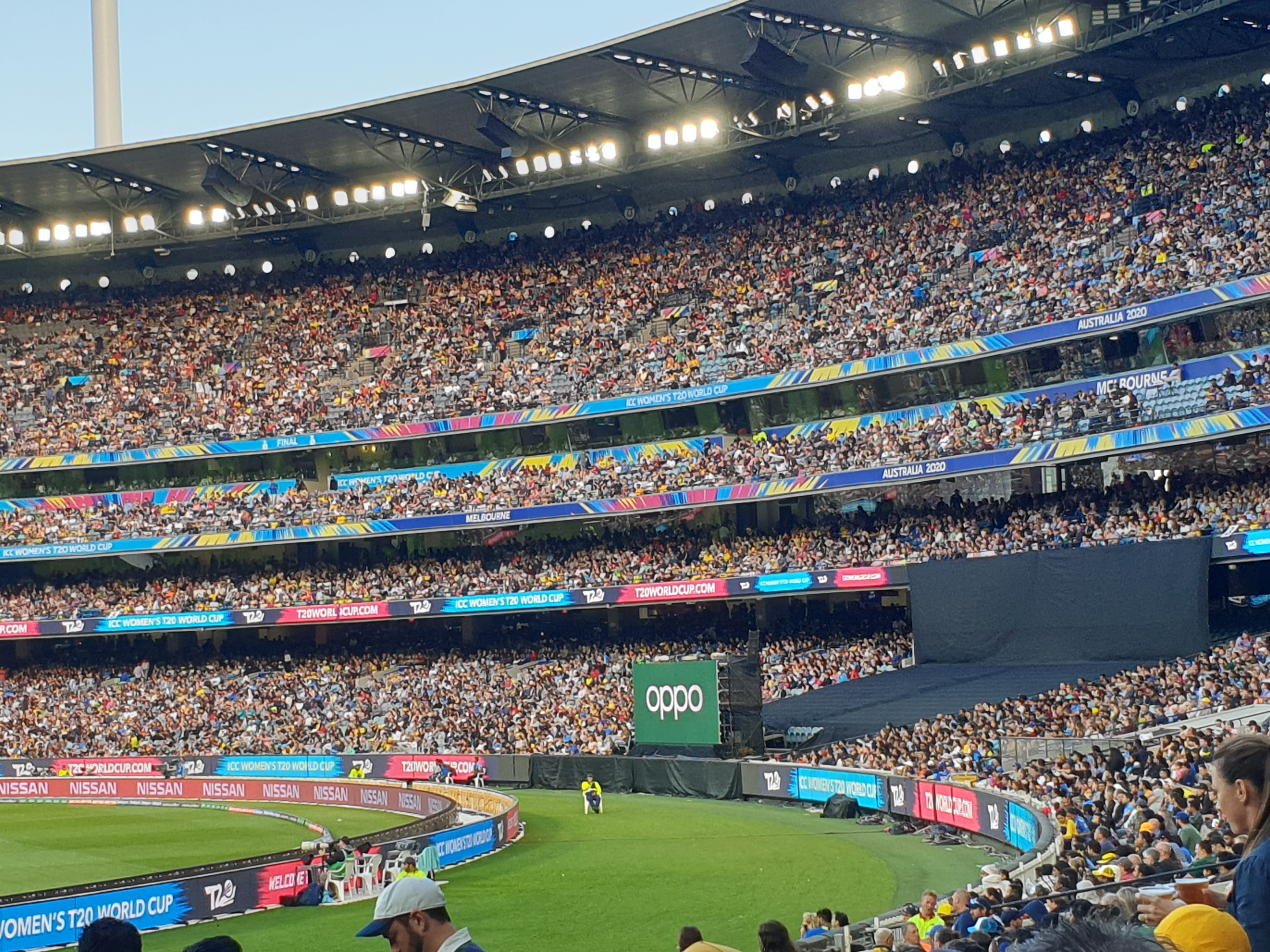
Already it seems like a different world from just on two weeks ago, when I was down in Melbourne for the T20 final. A brilliant performance by the Australian team. Katy Perry and the dancing cricket bats. A packed MCG. And now events with over 100 people are basically banned.
Australia had just had the worst summer in terms of bushfires, and now, looking back, this great night at the MCG seems a moment of poise before we fell over into the world of the virus. So glad that I have the memory of this night! And I can’t wait for ridiculously large crowds to reappear.
Tuesday prose: Maps (about the fires)
January 12, 2020
Maps
Until January I had never heard of a P2 mask. Now three of them sit in my wardrobe just in case. The air outside is the worst in the world, the media keeps telling us, as if this has really put Canberra on the map. If we drew such a map, the only symbol should be that of a lung, shaded pink in areas without thick smoke or smog, and moving through various shades on grey. In the centre, we would draw a huge black lung, pierced by the giant flagpole on Capital Hill, letting out a stream of toxic gas, into the toxic air.
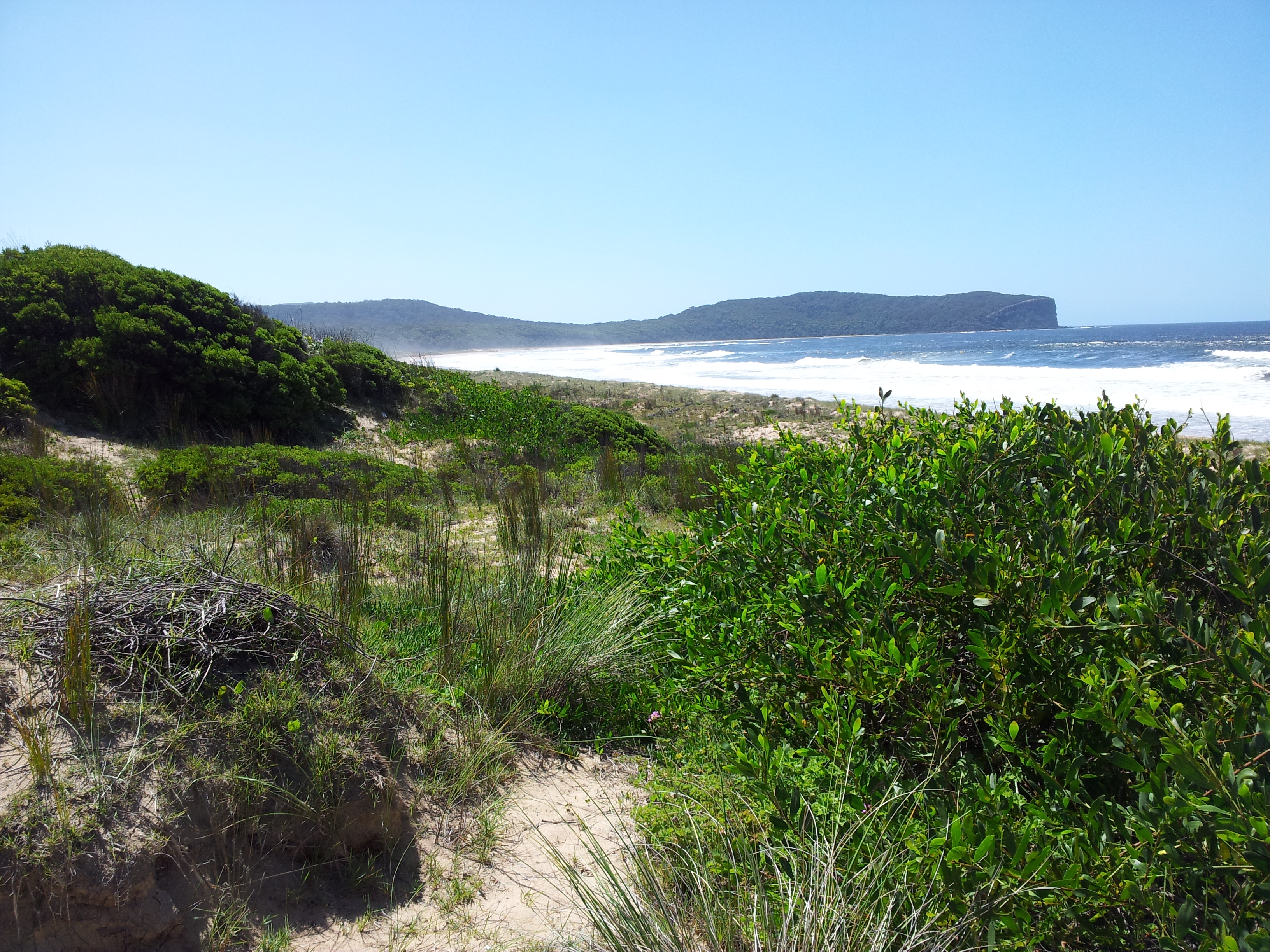
Every year, around this time, we’re down at the coast, swimming, surfing, birdwatching. South Durras is a tiny village, nestled between the lake and the sea. A place where lorikeets eat nectar and kids still ride bikes without helmets. Tiny fibro houses emphasise that nature is more important here than architecture; they are only places to retreat to when the beach is too hot.
But this year, and late last year, we have only seen South Durras on maps. Fires Near Me charts the growth of enormous blazes, bearing down on many villages along the coast, and further inland between Canberra and the sea. I keep the page open, check it every fifteen minutes, although it couldn’t possibly be updated that often, The roads to get there are closed, and what use would I be down there, where there is no connected town water? All I can do is check the maps, and facebook posts by those still in the area. The RFS. The one shop in Durras. Friends of Durras, a conservation group. A live blog run by the Batemans Bay Post. Then back to the maps, as if my gaze can somehow stop the killing fire.
Last time I was in Durras, we went birdwatching, and saw red-browed finches, tiny active balls of fluff, with bright stripes of crimson near their eyes. Like fire, I thought, a thought that now makes me ill, as I wonder how many of these little birds have been lost to the enormous blazes. Small birds can’t outfly a fire. My copy of Birdlife Australia’s magazine arrives, with the black-throated finch on the cover, the one that lives where the Adani mine may be. The red and black finches merge in my mind. I check the maps.
Canberra has been lucky in not burning. In 2003, people lost lives and houses when a fire burnt into southern suburbs. I walk around, trying to breathe the luck, wondering if this is the taste of the future. I won’t take the dog out, as it’s too hot for her, and she’s not young. People are told not to run air conditioning that sucks air from outside, as the air inside would become too dangerous to breathe. Our fans, though, only circulate what is already inside. Another record falls; the hottest day ever recorded in Canberra at 44 degrees Celsius. Too hot to go out and try to breathe. Better to stay inside with Fires Near Me, to see if the dark line on the map has moved.
I am ashamed that I focus on one tiny part of NSW, given that the whole country seems to be burning. Kangaroo Island loses half of its koalas, ones that do not suffer from chlamydia like many on the mainland. People are missing in most states, some presumed dead. Firefighters work to exhaustion. Some have lost everything, and who didn’t applaud the woman in Cobargo criticising the Prime Minister for doing nothing for her community, which has been through a number of crises?
And yet, when I’m alone with the computer, it’s one small part of NSW I check on the maps, where I own a holiday place. If it burns, we’re insured. If it burns, we won’t be homeless. Fires burn everything, but class still comes into it. But it’s not finances I’m thinking of, but black cockatoos and finches, possums and wallabies.
One day, during the acute crisis, I walk outside and know that something is different. It takes a few seconds to register that the difference is the small area of blue, showing between the clouds of smoke. Are we so adaptable that we forget what has been usual until a few weeks ago? Do we reset our internal maps so quickly? Usually Canberra’s skies are blue, even in Winter, when we wake to frost. Is the clear blue to be gradually eplaced with this hazardous air, this grey blanket that stings the eyes and throat? I am conscious of every breath as an effort, and go back inside to hibernate through the Summer.
At the moment, my house still stands down at the coast. I try and write poetry about what’s happening, to bring words to bear on this disaster, to map the losses in small, telling lines. But how to capture the full dread of what is happening now, the Fires Near Me, and the worry that we are setting ourselves up for more such disasters in years to come, the Fires Yet To Be? How to map the future, the future that may be, the longitude of possible loss? I cough and check the maps.
Two anthologies for spring
October 20, 2018
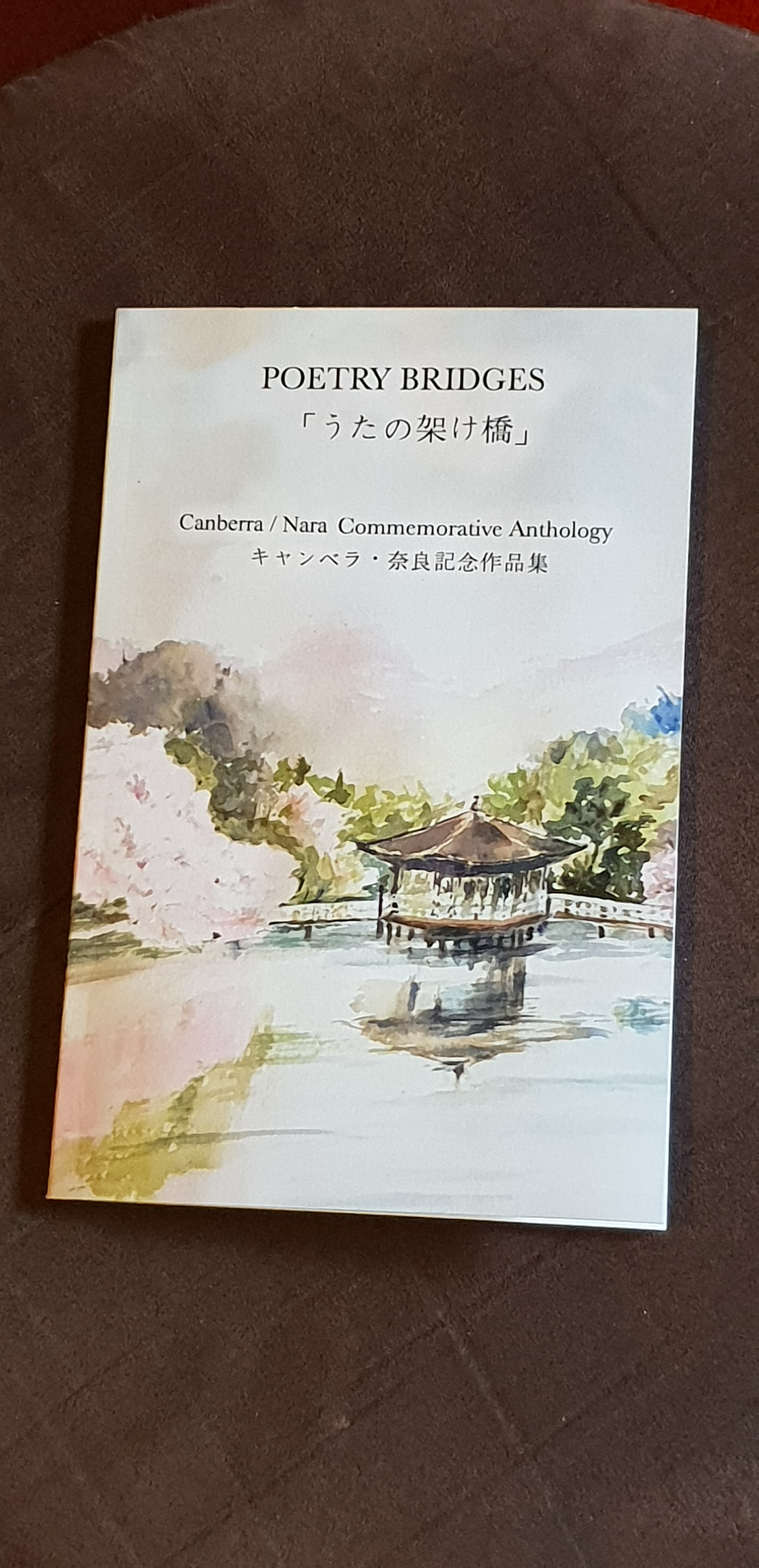
Very happy to have a poem in Best Australian Science Writing 2018, edited by John Pickrell (NewSouth Books), and another one in Poetry Bridges: Canberra/Nara Commemorative Anthology, edited by Saeko Ogi, Amelia Fielden and Noriko Tanaka (Ginninderra Press).
I just attended the launch of this second one, and it was a delight to hear the poems, including mine, translated into Japanese. There is a Nara launch next month, where the Japanese poems will no doubt also be read in English. Nara and Canberra are sister cities, and have been for 25 years. BASW is being launched in Sydney in November.

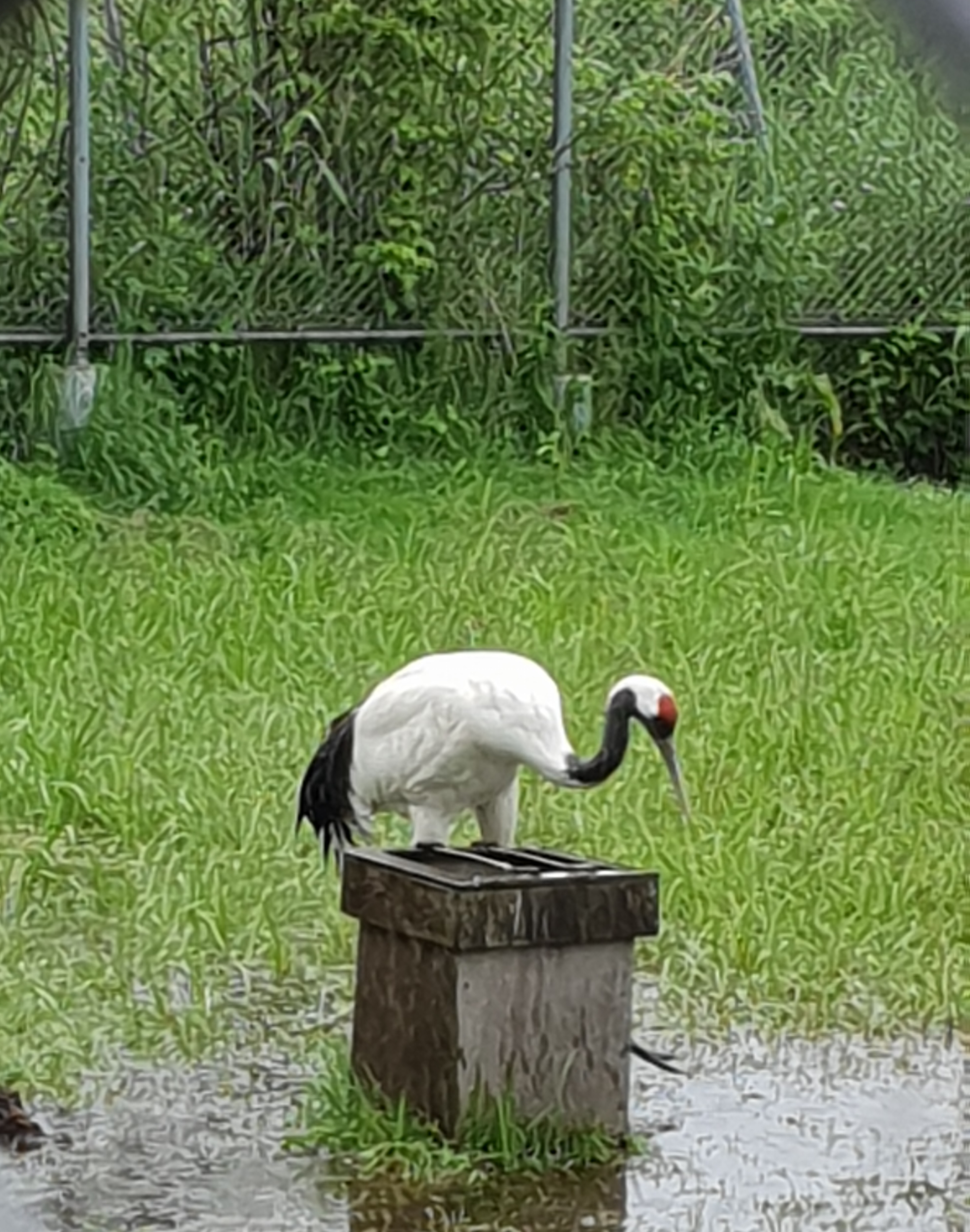
I am on two panels at Quantum Words in a couple of weeks; this is a day long festival looking at science and writing in Sydney. One is specifically about poetry and science, the other has the unassuming title ‘Writing the Universe’ which sounds vaguely biblical to my ears! To finish off, here is a very Japanese crane, at home in Hokkaido. We were lucky enough to see them in the wild, as well as at the sanctuary.
 PS Cottier