Seconds?
November 17, 2009
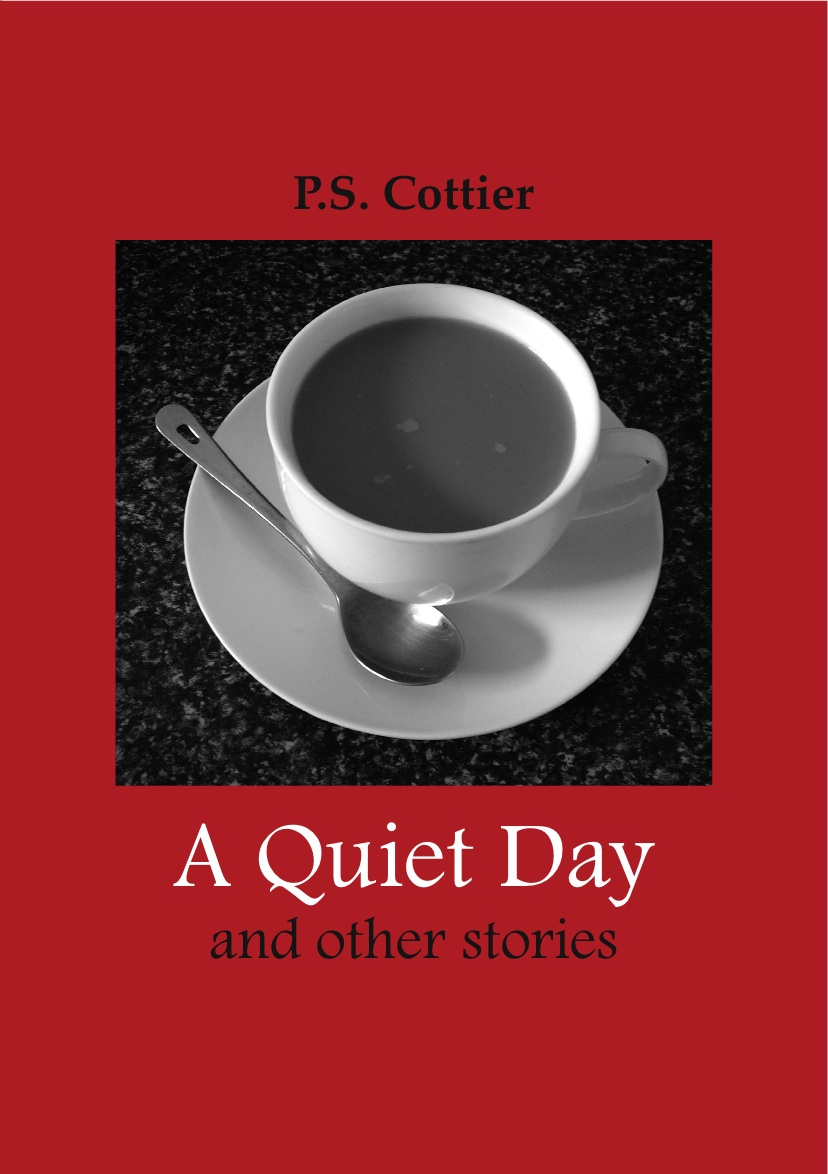
I’ve just had a second book published by Ginninderra Press (see blogroll), a collection of short stories called A Quiet Day. To be launched in December by Peter Frankis.
Launching books
atmosphere pulls
pages flutter
Really, perhaps I should leave haiku alone and stick to quirky free verse, which seems to be my forté. And super-short stories with twisty possum tails. Have you noticed that no-one says that anything is their piano, let alone pianissimo, as in something they’re hopeless at?
Novels were her pianissimo,
Crushing her in bulk,
smalling her to modesty.
She slams the covers on her fingers.
Enough. Blogging is the new nicotine.
Dear NASA
October 22, 2009
Ths poem recently won first prize in the C.J. Dennis Literary Awards (Auburn, South Australia) on the theme The Universe: Yours to Explore. Such an overwhelming topic seemed to call out for a little humour:
Dear NASA,
When we reach Mars, kicking up red dust,
walking against gusts like Marcel Marceau,
let’s not do what we did on the Moon,
forty leap and leap-less years ago.
Let us not plant any one nation’s flag,
like a toothpick through a lump of party cheese.
Might a woman set her feet first on the planet
so often connected with war? And please,
please, no one takes golf clubs, whether niblicks
putters, drivers or irons. Let Mars stay a place
untouched by sprees of futility, no heady sticks
to launch tiny white balls into circles of space.
Leave no junk; let the plains spread clearly.
Just a few thoughts from
yours, sincerely.
P.S. Cottier
Voices, internal and external
August 17, 2009
I have been doing a few poetry readings lately, at a number of different venues. In some ways, the reading of poetry aloud strikes me as a strange practice. No doubt rhymes evolved to make things easier to remember where the written word did not exist, or was jealously guarded by a chosen few. But those days are long past, and rhyme has often been abandoned, or, if used, is no longer a substitute for literacy.
The performance poet or slammer lives and writes for the spoken (or shouted) word. This is not, in general, my favourite type of poetry. Many crude faults are hidden behind the energetic or frenetic delivery. I saw one particularly bad example a couple of years ago which inspired this piece:
Waste of a good microphone
A decade since I saw him, this performance poet,
and the act is still the same, ten years in the faking.
World’s oldest adolescent, wings flailing, flirty windmill
hoping to attract stray Quixotes of attention.
Under that boil of a hat (one small step from beret)
his chin now quivers in time to his shout, as he revs
through a thick tarmac of prose. He calls it a poem.
(It is poetry in the sense that Bathurst is ballet.)
Fascinated, I watch the skin wattle sway,
muscle-less metronome catching winds
of his own indignation; a crashing fleshy kite.
A one miss wonder, he raises his frantic voice
and chops the air with blunt inadequacy.
The words skim like fatty stones, drowning.
Such dumb slabs to whet a frolicsome pen.
P.S. Cottier
But the reading out loud of poems that were written to be read from the page is the phenomenon I am dealing with here. When I write, I tend to read the poetry back to myself in my head, rather than out loud. It is a delight to me to hear others appreciating the word-play and musical aspects of my poetry when I read it out loud to an audience. But my ‘ideal reader’ is definitely an individual, reading from the book at his or her own home (or library).
Nevertheless, I like to think I am quite a good reader, with a decent appreciation of the needs of the audience. Some poets, contra the performance poet, see, to think that a mangled, quiet delivery adds a certain piquancy to the words. IT DOESN”T. Or that reading twenty pages of angst-filled obscurely referenced screed to a non-academic audience is appropriate. IT ISN’T. This shows a lack of respect, and does poetry no good at all, cementing into place the brickheaded equation of poetry = boredom. At least most slam poetry keeps the audience awake.
Between Shout Mountain and the Slough of Mumble lies the pleasant Valley of Appropriateness. Let’s all set our compasses and go in search of that verdant realm.
Loss of a pet
June 29, 2009
No obituary
Presented to us in a terrier’s mouth,
he squirmed his way back into being
through a tight vice of punctures.
Dinny (the dog’s near dinner).
An experimental dish who charmed
with his monomania for grass.
Grass in and grass out,
pelleted, my weed and feed,
my murmuring mower of lawn.
Tonight we return him to grass
and precious green will sprout
from pink, once eager mouth.
No obituary for a guinea pig
that simple vegetarian of soul.
None, that it, save this.
Madness and punctuation
May 29, 2009
Am I mad? Sometimes I think that I have a particular disease that makes my eyes see things that others don’t: the misplaced apostrophes with their little bracketed eyelids smiling as if to say ‘Yes, we’re here, it’s true’ or more accurately, ‘Yes, were here, its’ true’. (Insert long scream of Munchian proportions. I actually saw an its’ the other day. Them’s true words.)
Am I the only person still to wince,
to feel as if she had been pinched
by the claws of these evil crabs
with their crooked apostrophes?
Scuttlers’ of near illiteracy
I drown in your misplaced seas’.
(Of course that won’t work unless I used a font with nice curved apostrophes like claws. Please just use your imaginations…)
As for me, I think vodka is the only answer. It’s a nice blank canvas of a drink, punctuated by a neat, oval full-stop of a single olive, with no apostrophes in sight.
Cheers’ (Scream…)
 PS Cottier