Tuesday Poem
October 5, 2015
Today I edited the hub at Tuesday Poem, based in New Zealand, and posted a fascinating prose poem called ‘Before’ by Janette Pieloor. Read Janette’s poem by pressing here.

Tuesday poem: Fernando Pessoa shaves
September 29, 2015
Fernando Pessoa shaves
— and needless to say, the mirror
has three leaves. So at least
twelve chins require scraping
(for they all go beardless,
or at least, sometimes so)
and one, or four, can’t always
leave, to visit the barber.
Eight hands, a lively polvo,
attempt to shave straight,
but, let’s face it (ha!)
straight is not really
in their repertoire.
It is disconcerting when a man
metamorphoses from Fernando
into Alberto between nose and chin
as one uses a blade as blunt
as omniscience. Little rivers
open up, and flow into each other.
In one mirror-wing, Álvaro bleeds
and in the other, Ricardo winces.
The eight hands become twice twelve
in the trinity of glass.
In the corner of one wing,
see that crack? One, or four,
become a jigsaw, no, a galaxy
of Fernando and his others.
This is the image which one might
or could, possibly call true.
The eye of one bends into
chin of the other; a quiet, crazed
Picasso, but with a line less sure.
He had never belonged
to a crowd. Except to himselves.
P.S. Cottier
Poet’s note: Fernando Pessoa’s main heteronyms included Alberto Caeiro, Álvaro de Campos and Ricardo Reis. He also wrote as Fernando Pessoa. ‘He had never belonged to a crowd’ is from the Preface to The Book of Disquiet, by Pessoa (or Bernando Soares) tr. R. Zenith.

who left the drawbridge down?
I’ve been thinking about heteronyms and pseudonyms and all the nyms lately. What is authenticity? Are anonymous comments any less valuable than attributed ones? Is pronouncing the death of the author pretty damned silly, given that multiplicity has replaced a singular notion of the self?
Also, where do seriousness and play merge? In this poem, they merge in a mirror. They also merge in sandpits, if you’ve ever watched children play, or can remember being a child.
Do head over to the Tuesday Poem site, for a further dose of poetic goodness, blended to perfection. Read the works of the other Tuesday Poets around the world by pressing here.
Cartree
September 18, 2015

Door swings
invisible driver
burn out
This photo of one of Australia’s rarer floral symbols was taken at O’Connor Ridge. I also saw a cat trying to eat a rabbit. There were parrots, but the cartree sticks in my mind. Perhaps a whole new car will regenerate?
I have to link to a great poem by SK Kelen about O’Connor Ridge, which seems to attract poets like car parts and other ferals.
Tuesday poem: Limerick
September 15, 2015
There was a young lim’rick called Brian,
Whose rhyming was most far from fine:
Critics laughed and then pointed
And said ‘He’s disjointed!’
Which hurt the young lim’rick called Brian.
P.S. Cottier
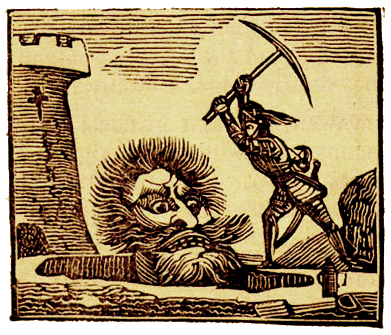
Those who think I should hang my head in shame do not know me very well. I will take play over dry reflection any day. Also, there was an excellent limerick feature in a recent issue of Poetry (the gorgeous one from Chicago) by Anthony Madrid, and who am I to argue with that?
Next week, however, I promise to be more serious, as befits one who is web-linked to other poets.* Read the works of the other Tuesday Poets around the world by pressing here.
*That is a promise in the same sense that a politician promises to stick to policies. A politician is a politician, however well he or she wears a suit. Australia’s new PM has the most lovely suits.
Tuesday poem: Wattle
September 7, 2015
Wattle
Confetti throws handfuls of self
against ecstatic sky
cheering its union with blue.
This is no watercolour plant.
Each bubble blown is distinct
a life born from Winter’s death.
I look at the tree and see God, hear
a choir of yellow lungs, inflated.
But then again, I’m not allergic.
P.S. Cottier
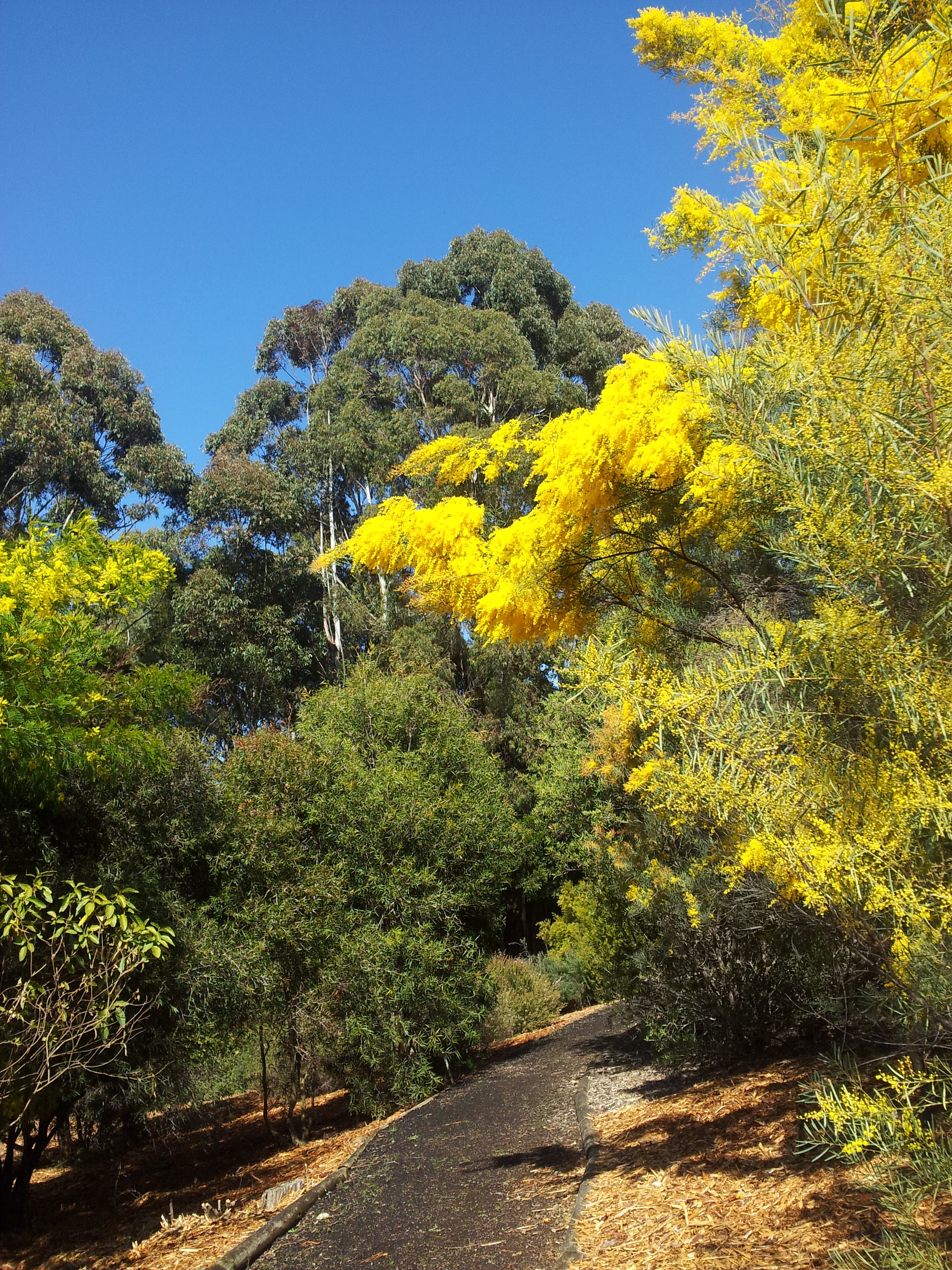
I will avoid any puns using the word spring in this post, however hard that is for me. Tonight (Tuesday) I’m reading at The Gods on the ANU campus (a short distance form the Australian National Botanic Gardens, where I photographed the wattle), with Melinda Smith and Owen Bullock. I am reading mostly new material. I am finding it easy to write at the moment, which has to be a Good Thing. I just hope that it’s not a sudden blaze, fading as quickly as a wattle.
Good to see that I am keeping my glorious pessimism well watered! It’s like a wattle, but beige, and it smells a bit like very well used socks.
Read the works of the other Tuesday Poets around the world by pressing here.
 PS Cottier