Tuesday poem: Answered by reptile
March 26, 2012
Answered by reptile
So the knives are getting
too sharply attractive,
your interest in wrist as whetstone
perhaps a little too keen.
Not even puns will save you,
those tight little refuges of spin.
So you get on your bike and go,
two wheels set towards infinity.
You even try this new cycle of prayer
as you sit beside the muddy pond.
but asking for strength is too clichéd.
Christ, it seems, has heard too much,
and won’t suffer that sort of shit,
(at least from the middle classes).
You look up, and see a tortoise,
neck out, a hyphen joining shell to air.
He suns himself on log island,
quiet, content; most of him tucked away
like a whispered promise.
And you know, that for today,
you will no more think to
carve a manic smile in wrist
than shuck him from his shell
and leave him wriggling on ground,
a discarded lively gob of snot.
His grey oval is an iris, glancing
at you, from pond’s centre;
winking you back into light.
P.S. Cottier

This poem is dedicated to anyone who has ever felt suicidal. Not just down with a hangover, or upset when they split up with a lover, or lost a job, but really suicidal. (And no, that’s not me.) May you find your own tortoise!
 If you click this feather, you will go to New Zealand, where they may or may not have tortoises, turtles or inferior snakes, but where poems can certainly be found. Start with the middle poem, and then check out the bits on the side. Or read it however you want, you anarchist you.
Tuesday poem: ‘Clancy of the Overflow’ by A.B. (Banjo) Paterson
January 23, 2012
I had written him a letter which I had, for want of better
Knowledge, sent to where I met him down the Lachlan, years ago,
He was shearing when I knew him, so I sent the letter to him,
Just “on spec”, addressed as follows: “Clancy, of The Overflow”.
And an answer came directed in a writing unexpected,
(And I think the same was written in a thumbnail dipped in tar)
‘Twas his shearing mate who wrote it, and verbatim I will quote it:
“Clancy’s gone to Queensland droving, and we don’t know where he are.”
In my wild erratic fancy visions come to me of Clancy
Gone a-droving “down the Cooper” where the western drovers go;
As the stock are slowly stringing, Clancy rides behind them singing,
For the drover’s life has pleasures that the townsfolk never know.
And the bush hath friends to meet him, and their kindly voices greet him
In the murmur of the breezes and the river on its bars,
And he sees the vision splendid of the sunlit plains extended,
And at night the wondrous glory of the everlasting stars.
I am sitting in my dingy little office, where a stingy
Ray of sunlight struggles feebly down between the houses tall,
And the foetid air and gritty of the dusty, dirty city
Through the open window floating, spreads its foulness over all.
And in place of lowing cattle, I can hear the fiendish rattle
Of the tramways and the buses making hurry down the street,
And the language uninviting of the gutter children fighting,
Comes fitfully and faintly through the ceaseless tramp of feet.
And the hurrying people daunt me, and their pallid faces haunt me
As they shoulder one another in their rush and nervous haste,
With their eager eyes and greedy, and their stunted forms and weedy,
For townsfolk have no time to grow, they have no time to waste.
And I somehow fancy that I’d like to change with Clancy,
Like to take a turn at droving where the seasons come and go,
While he faced the round eternal of the cashbook and the journal —
But I doubt he’d suit the office, Clancy, of “The Overflow”.

'...that is all/Ye know on earth, and all ye need to know.' (?) The sun seems to be located near Broome.
Yes, I’m going into fervent Australian mode as Thursday 26th January is Australia Day, or as some like to call it, Dags with Flags Day. Anyone who dabbles in this blog will now that criticism of aspects of Oz society is rampant to a positively un-Australian degree, so this classic 1889 verse from Banjo Paterson may raise me back to the golden realm of unadulterated, frolicking patriotism. (My shallow cynicism is in fact a cover for an embarrassingly gushy love for this country, but let’s pretend I’m not feeling that at all, shall we? Love is so much harder to write about than anything else, and I wouldn’t want to fall short.)
Actually, I love this poem too, particularly the ‘thumb-nail dipped in tar’. The longing for the pure realm of the bush that this poem exemplifies is something that still marks Australian poetry. Ask anyone where the best-known Australian poet lives today, and they’ll point to Bunyah and Les Murray, not to Sydney and…anyone in Sydney.
The suspicion of the urban environment, even in one of the most urbanised of economies, also lives on, I think. Real men are out there somewhere, with the kelpies and the sheep, in the ‘virginal’ bush, roaming as free as the public domain status of this poem. (Just don’t mention the previous ownership…I don’t mean the poem.)
A word about flags. The Australian flag is definitely seen much more than it was when I was a child. Not on public buildings so much; I remember having to recite something like ‘I love God and my country/ I will honour the flag/ and cheerfully obey my parents, teachers and the law’ at primary school. Boys actually saluted the flag during this, while girls preened and made scones. But today we do see more private display of the Australian flag. Is this:
(a) because we ape America in everything, even flag-waving, although it’s a different flag?;
(b) people have more money, because of our flogging huge amounts of iron ore and uranium (and other good stuff) overseas?; or
(c) flags are cheaper now, and we receive millions of plastic ones back from the countries we sell huge amounts of iron ore and uranium (and other good stuff) to, in an equitable and sensible exchange?
I really don’t know, but I find these public displays of private flags very strange indeed. I worry about how their display might be related to charming bumper stickers such as ‘I Grew Here You Flew Here’, and ruder variations thereof. Not that you see many of them in Canberra: you’re more likely to read ‘Refugees Welcome’ in the ACT. But as I hear constantly, Canberra is not Australia.
Enough. Screed is bordering on The Burning Slough of Rant.
If the cloying smell of cattle or the sticky feeling of the wool emanating from this piece is disturbing you (or perhaps the premature reek of a million sausages on a million barbies is getting up your nose?) please head over to the Tuesday Poem Site, where the vowels may be a little rounder and the patriotism seems slightly more occluded, at least from a distance. (Until the next rugby thing, anyway.)
Abbott’s booby
December 3, 2011

Sorry if the word ‘booby’ misdirected you here.
This is another poem about Tony Abbott, leader of the Liberal Party in Australia, which is similar to the Conservative Party in England, in many ways. (Here’s the first one published on this blog, relating to climate change.) I recently had a poem about Australia’s attitude to refugees who arrive uninvited published on Eureka Street, remembering the dozens of people who died last year, smashed on the rocks of Christmas Island, an Australian island that is no longer part of Australia for immigration purposes. That poem featured the Christmas Island crab. This one draws links between another native of Christmas Island, Abbott’s booby, and the Leader of the Opposition.
Abbott’s booby
This poem regurgitated itself into my mouth —
a sardine of ill repute, silver little slug.
Abbott’s booby is a native of Christmas Island,
flying around and around.
Its cry is unmelodious,
unfit for any proper idyll.
It picks up stray ideas
and smashes them onto rocks.
(It is in league with the crabs.)
It is a member of the Gannett family.
And there, the useful metaphors run out,
like a big country’s generosity.
For this is a large, graceful bird,
once it has struggled into flight,
and it only troubles the wind.
It is unrelated to the budgie.
It is endangered.
Others, though, are entering their prime.
Oh silver, stinking poem,
shoved down a gagging throat.
P.S.Cottier
Hip hop before hip hop
November 22, 2011
Australia’s loss of frog species is, I believe, the worst in the world. We have lost the gastric brooding frog. The corroboree frog, a species that lives in the few really cold parts of the country, is the subject of directed conservation efforts, yet one wonders how it will cope with climate change. Here is a flyer (hopper?) for a US frog poetry competition, because the problem isn’t confined to Australia. Click to enlarge. Here’s their web-site. I have no connection with this group, but it seems like a good way of encouraging people to think about conservation; I’m putting the poster up at my daughter’s school.
Following below is a poem about a wonderful night when I saw a road covered with frogs in a jumping carpet. It is biologically inaccurate, but I tried to capture the sense of wonder that came with what seemed like a million frogs. I wonder how long we will continue to see this type of natural phenomenon?

Frogs at Durras
We bought a house, feeble fibro shack,
walls thin as a yacht’s, teetering near the sea.
The second time we drove there, slowly,
tentatively, nosing towards ownership,
a rough jagged rain sawed through twilight.
We wondered if the house could survive.
Turning the corner, our eyes jumped,
jerked at a million tiny frogs revelling in rain,
the black streaming street a foaming river.
Each raindrop a watery egg, containing
tadpole, exploding into perfect frog
as it hit the tarmac, transmogrified.
I ran ahead of inching car, scooping throbbing fistfuls,
placing them on nature strip, dividing green from black.
And still they splashed and clung to sodden tar,
each splayed finger reading braille on the rough road;
indecipherable invitation to party, or to climb, perversely,
the dark warm curves of the sudden crushing car.
Three years later, we sit in heat, and await the frogs
never seen since the Walpurgis abandon, that abundant night.
Sometimes we have heard them, piping, tinkling, muted bells,
signalling to each other, chirruping reminders
as they wait beneath rocks, huddled in just damp dark
that all droughts must break. Our house still stands.
P.S.Cottier
Launch of The Cancellation of Clouds
October 21, 2011

This is the cover of my third book, with a somewhat pensive sheep under a very blank sky. (It’s a poetry collection.)
Hal Judge launched The Cancellation of Clouds at 6pm, Thursday 20th October 2011 at Smiths Alternative Bookstore, Alinga Street, Civic. (Civic is another name for Canberra’s ‘city’ centre – a non-existent thing, really – and the name is intended to contrast with political, governmental, national Canberra.) Hal gave a very thoughtful speech, and I read a few poems, and drank a poetic amount of wine. Senator Nick Xenophon, an independent Senator from South Australia, also read a poem, after he launched the bookstore’s new bar.
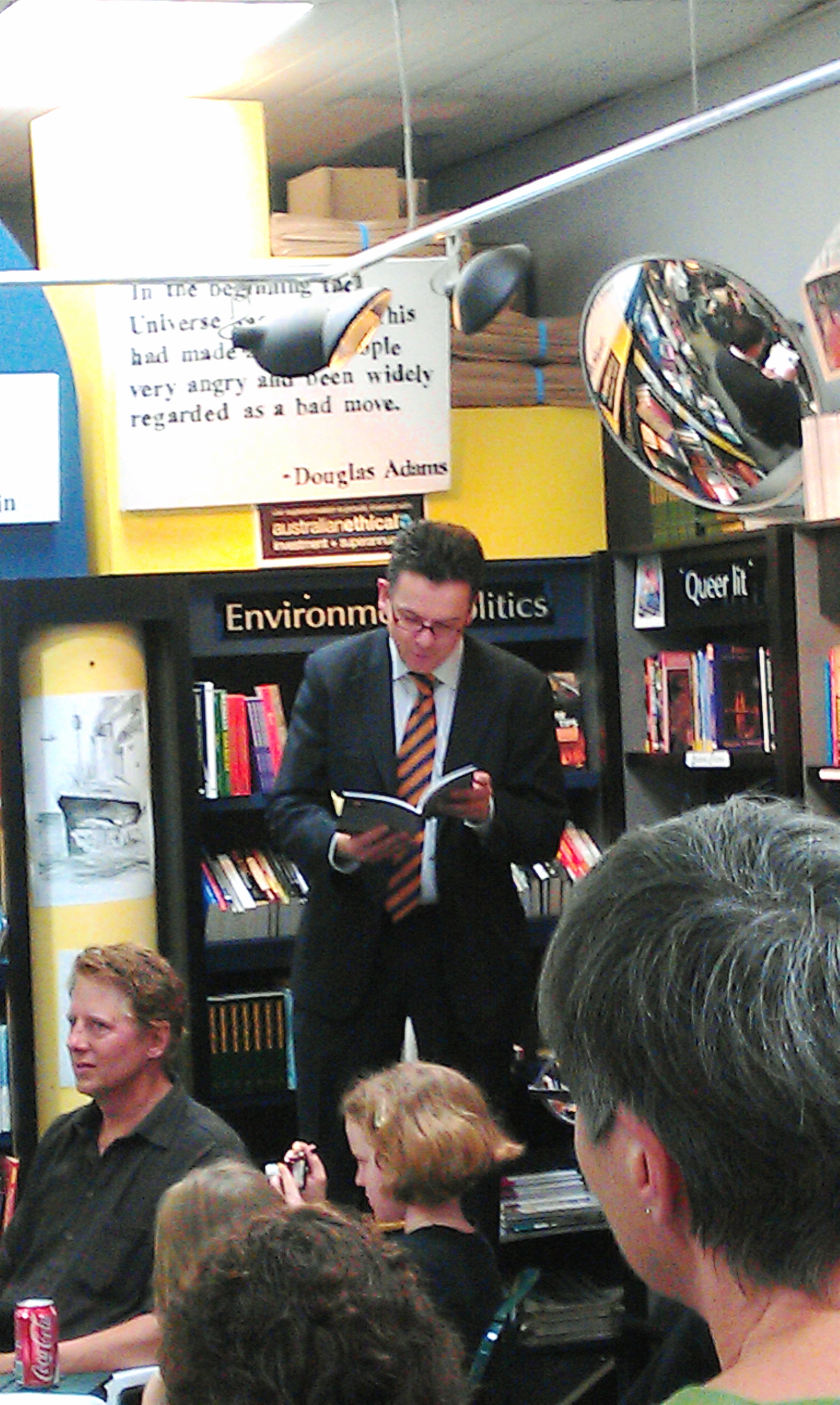
Senator Xenophon takes a gamble
(Thanks Lily Mulholland for this photo.)
If you would like to order the book, please go to this page, within the Ginninderra Press site. The first review of the book, by Professor Peter Pierce in The Canberra Times, describes it as ‘droll, intelligent and varied’, which was a very positive thing to read. And totally right, too! Another reviewer, Michael Byrne, states that ‘It is…love for (and embracing of) the different that seems to define Cottier as a poet.’
And in the book’s first international recognition, New Zealand poet and man of letters Tim Jones describes The Cancellation of Clouds as an ‘Australian poetry collection with a distinctively wry yet dark tone and very effective use of long stanzas and densely packed lines.’. All very gratifying, especially hearing I’m more dark wry than white bread…
***
Now I return you to the real piece that bears the title given above. I originally wrote what follows below back on January 22, 2009, and it still seems a good inclusion for my blog, although I notice a recent trend to write a little more often here than I did originally. For a long time this was the first post the reader saw on my blog, and I only recently allowed it to move away from its ‘sticky’ position on the first page.

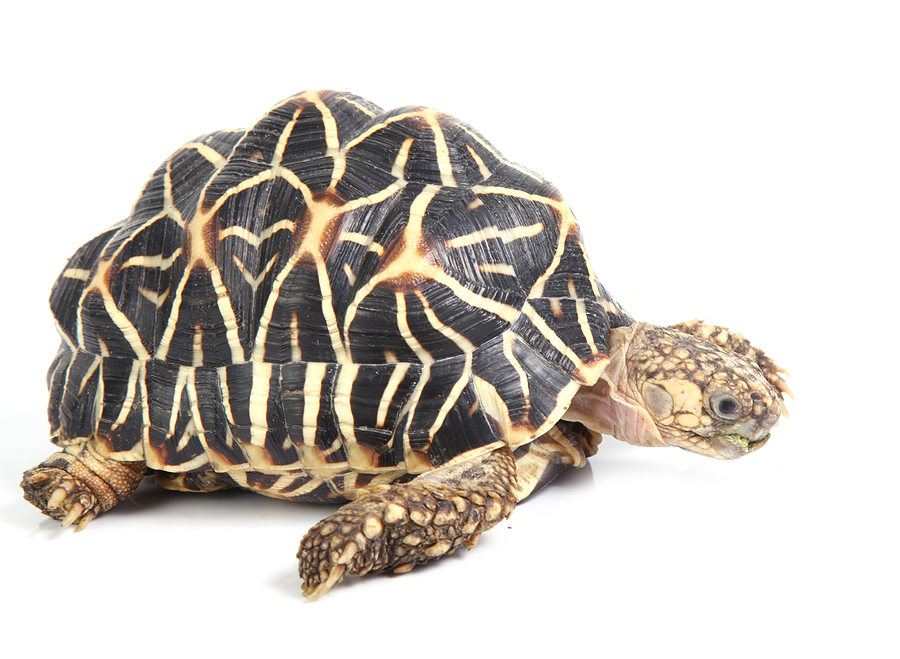 Cicadas and tortoises. And poetry?
In my case, cicadas and tortoises seem apt metaphors for the process of writing. My first book, The Glass Violin, a poetry collection, has just been published by Ginninderra Press. Some of the works in the collection go back twenty years, so the easy option of comparing myself with a tortoise comes to mind. There’s nothing like a good old shell of cliché in which to hide an idea.
Yet I actually write quite quickly. I’ve just been a shocker about trying to have my work published. About a year ago I decided to put an emphasis on seeking publication, and I have been quite fortunate in finding places that liked my work.
Cicadas spend most of their life underground, only emerging after years and years to produce an ear-splitting cacophony. They only live a short while after emergence. As a practising poet, I feel a lot like one of these insects, pushing through editorial mud, but hopefully the process of publication has just begun. I wrote this poem about the vocabulary used for referring to poets as emerging, developing and established:
Emerging poets
White, shovel-shaped finger-nails,
rotten smell, the world’s worst bulbs.
Like durian fruit mushrooming,
zombie poets emerge, pushing
through editorial soil, groaning,
after a decade’s slushy stew.
Perhaps some emerge politely,
quaint chicks toothing oval eggs.
Others make neat papier mâché
cocoons from rejections, wait,
then one day, poof! Harlequin
wings, trembly antennae. Most
are born bogongs, banging on
bright lit windows. Any more sir?
(I like to think that my poetry is a little more melodic than the noise of a cicada, although this example is admittedly a little less than elegiac. Incidentally, all poems on this site are by me, unless otherwise indicated.)
This will be a very occasional blog, as this cicada prefers to work on her poetry. It’s always a temptation to bury yourself away, once the soil has been so very comfortable for so long…

I was very happy to read this review. And this one, too.
And since then, a second book, this time a short collection of short stories:

Both can be ordered from Ginninderra Press, under poetry and fiction respectively.
 PS Cottier