The best thing about writing a blog…
January 28, 2011
…is that you can post poems or stories that you know would be rejected from serious poetry journals. This little piece (not a story, certainly not a poem) deals with the Antipodean writer seeking publication in a Very Serious American journal. It’s partially based on fact: I had one editor tell me that while international submissions would be accepted for a competition, he didn’t encourage them, as some of the publisher’s books once went astray in Asia. A broad geographical area that presumably includes Australia. Needless to say I didn’t enter that competition. (Most US journals/publishers are much better than this, by the way.)

Smart and Serious
‘Be professional, patient and persistent’
Advice given on Duotrope’s Digest web-site
Three communications received from Smart and Serious: America’s premier journal of the literary short story and of avant-garde poesie by Ms Felicity Quillpien, writer (retired) of Sydney, Australia.
1-2-2011
Dear Ms Quillpien,
We love your story! It deals with the essential paradoxes of the human condition in an elegant and thought-provoking way. I particularly enjoyed the way you played with notions of gender throughout your story. Your style rivals that of Jane Austen and the description of the house of endless rooms is positively Kafka-esque! Congratulations!
However, Smart and Serious is a literary journal, and we are therefore unable, under any circumstances, to publish science fiction.
I suggest you submit to a genre magazine, if such pulpy things exist outside of my worst nightmares.
Yours sincerely,
Roland K Roland
editor
P.S. We are unable to return the manuscript, or your attractive ornamental tokens (‘IRCs’ whatever they may be) due to your disregard for our instructions that adequate postage be attached to a self-addressed envelope.
2-1-2011
Dear Ms Quillpien,
Sincere praise for your new story. I am glad to see that you have jettisoned any suggestion of the future, adventure, humor (note spelling, please) or the possibility of a life in any way different from that currently lived in North America (excluding Canada). The lack of any verb in the first ten paragraphs struck me as particularly conducive to engendering a feeling of contemplation on behalf of the more sensitive reader of our peerless feuilleton.
I was about to mail the acceptance letter, when I noticed you live in Australia. Smart and Serious does not accept stories translated from the original, although we often favor (spelling) the French language in our use of English. We find it adds a certain Proustian quality, the soft pas of a boulevardier, the frou-frou of dresses and the enchanting smell of the salon, would you not agree?
I suggest you submit to a German language literary journal, if such boldly Teutonic things exist.
Yours sincerely,
Roland K Roland,
editor
8-3-2011
Dear Ms Quillpien,
Thank you for your enquiry about submitting to Smart and Serious‘s first ever short story competition. I answer your rather curt questions and complaints in turn:
1. Payment must be made by check. (Please check your spelling before even considering further communication. Last I heard, a cheque was a type of European to be found quite close to Australia’s borders.)
2. I am sorry that a check for $15 US costs so much to arrange in Australia. May I suggest that a change of venue might be in order? Smart and Serious, as a literary journal, can hardly concern itself with the realities of international commerce, politics, or economics. ‘Countries may come and go but soft Literature is forever/ She slides through crepuscular mornings like a feline snail.’ (Copyright, Roland K. Roland, from Stanza 58 of my ‘Thoughts for Twilight Mornings’, forthcoming in next month’s Smart and Serious.)
3. Cash is not acceptable. It would lower the tone. Your suggestion that ‘money is money and at least the dollar speaks clearly’ does not bode well for any story that might be about to spring from your marsupial pen.
4. Electronic submission is similarly vulgar. If we embraced technology, next we knew, we’d be publishing science fiction! God only knows where that might lead!
I hope that this helps you in your admirable if rather surprising intention of submitting an entry (English original only, danke) to Smart and Serious. We like to think of ourselves as literary missionaries, bringing culture to the world. The world can only learn from the American literary journal, of which Smart and Serious is the exemplar, par excellence.
As I have been busy lately, I am afraid that the closing date for the contest has already passed. As the French put it, Temps fugit! Perhaps you might consider an entry in next year’s contest instead?
Yours sincerely,
Roland K Roland,
editor
bats, owls, hedging your bets
February 2, 2009
‘There are dark shadows on the earth, but its lights are stronger in the contrast. Some men, like bats or owls, have better eyes for the darkness than for the light.’ Charles Dickens, The Pickwick Papers
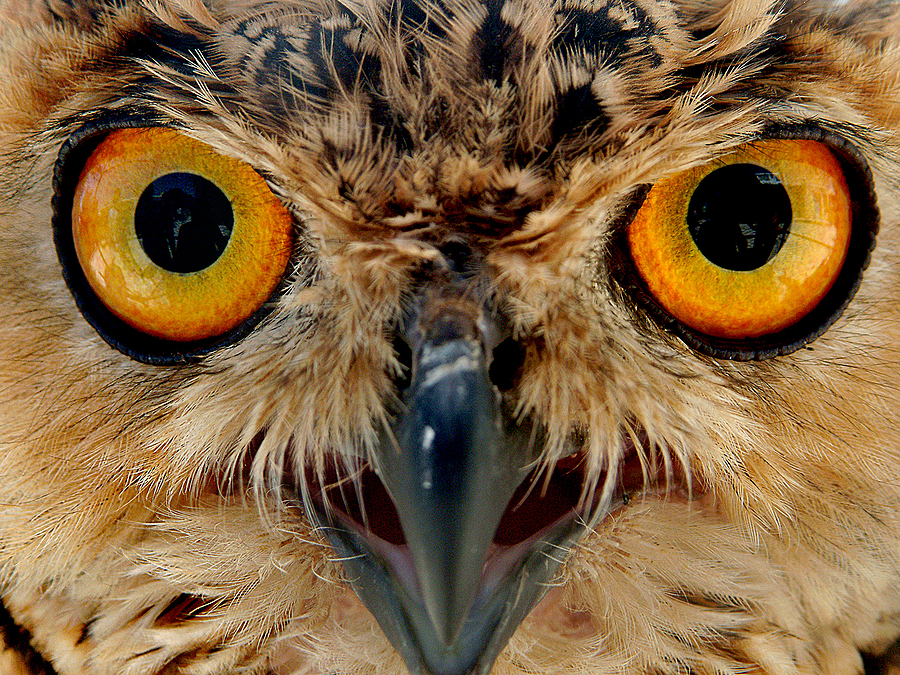
I see even better than you, Mr Dickens...
Who do we compare ourselves with when writing? During the process itself, all comparison should surely be banned. But upon reflection, it’s inevitable that some influences become clear, and that some assessment of ourselves against others takes place. This self-criticism is the only kind that really matters, after all.
It would of course, be hugely unproductive for a novelist to set out to be ‘as good as Dickens’ or a poet to set herself up as the next Milton. Unless one is psychotic, such reckless confidence would be bound to end in failure. But if one just occasionally finds a teaspoon of the richness of invention shown by Boz, or a tinge of his humour, that should be more than enough. (It’s hard to imagine any comparison with Milton bringing comfort. Apart from a mythical creature who is writing several volumes on the history of physics and the creation of the universe in rolling, unstoppable Big Bang rhyme. And if you are that person, the word ‘ambitious’ is probably apposite, dear little Satan of science.)
To look at one’s writing and say ‘it’s not as good as X’ (if X is not a joke) is to look at things through the night-coloured glasses Dickens evokes in the quotation given above. Far better to say does this represent a development of my own voice? Your own voice is inevitably formed by the previous words of others, but this should be a liberation, not a restriction.
At the same time, until you have read and continue to read as much as you possible can of writers good and bad, you will not have the framework for honestly assessing your own work. Creative writing courses that encourage people to ‘write what they know’ without seeking to increase their knowledge of literature are hideous aberrations. To write is to enter the maze of all that has been written before:
‘…mazes intricate,
Eccentric, intervolved, yet regular
…when most irregular they seem’
(Milton)
You’re never going to get out of that maze. Most will sit and look at single leaves growing on the hedges making up the maze, and try to describe them, rather than reaching the centre where Milton and Dickens (and others) are having an endless Pickwickian picnic. (Milton at a picnic is a terrifying idea, incidentally.) Given they do this carefully and respectfully, with humour, emotion, inventiveness, or with hedge-trimming satire, nothing could be more valuable. If we just blunder along, relying on nothing but luck, the result will probably be less than enlightening.
 PS Cottier