So if you’re also a poet…
May 3, 2016
No poem today, but I thought I’d share information about some great poetry prizes.
Firstly, the Australian Catholic University has a competition on the theme ‘Loving Kindness’. When I first heard the theme, I was less than rapt, but the more I thought about it, the more a poem wriggled out from between the words, until it demanded to be penned in the seedy corral of a poem. This contest is open to Australian citizens, permanent residents, and overseas students studying in Australia. Here is the link. Closes early June. There is a nice, really well catered, ceremony held in Melbourne at which the (generous) prizes for this are awarded. I was placed third last year and read my poem there. A book of entries was produced too. Entry is $20. And, no, you don’t have to be Catholic, or of any other religion (although you can be!).
Secondly (and this one is open to all poets writing in English) there is the University of Canberra Vice Chancellor’s International Poetry Prize. There is no theme for this one. Again, there are great prizes, including a tidy $15,000 for the first place getter. However, some may quite reasonably baulk at the entry fees for these prestigious competitions ($20). There is a discounted rate for university students, and there is also a separate free competition for students in Year 11 and 12 at an ACT or NSW school. There are also cash prizes for this one, and ‘winners will be invited to attend the IPSI Poetry on the Move festival where they will be invited to read their poem and a chance to meet some excellent poets.’ And possibly some mediocore ones! That is not compulsory though.
There is yet another competition being offered through the University of Canberra too. This is the Health Poetry Prize, which is only open to Australians, and the poems must be on the theme of ‘Living Life Well’, which also sounded vaguely off-putting to me at first glance, until I noticed that the poem could also deal with barriers to ‘Living Life Well’. So there is no need to use that foul word ’empowerment’…This one is $10 to enter, and seems like a great initiative.
Of course, everyone who has ever written a poem in English, and their more literate pets, will enter the international Uni of Canberra one, which makes it the most competitive. (Given that ‘everyone’ has a credit card with at least $20 left on it.) These things are a bit of a lottery (however well qualified the judges are), but if you get a decent poem out of the process, it may be worth it.
My own view of poetry competitions is that if the topic catches my eye, I’ll have a go, but I won’t force a poem out because there is a competition. I have written about the whole economy of competitions elsewhere. (At Overland.)
Have fun!

Tuesday poem: Two thousand years (or so)
March 28, 2016
Two thousand years (or so)
And so, before this, in Europe,
there were eggs, and celebrations
and the lovely call of Spring?
So what, my dear, so what?
Give me the man
with the steel pierced hands
and the rock rolled back.
Give me blood, and the wine and bread,
the kiss on the cheek
the love of the leper,
and the woman loving too much
he dismissed with equal love.
This is the man;
and always the women
listening and learning (and even teaching),
and mourning, until he came to whisper;
I am faithful and I am here;
always alive and always here.
My Easter, so very old.
My Easter, so very new.
P.S. Cottier
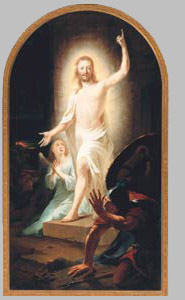
I really don’t know how I managed to post two ginger Jesuses, but I suppose I can pretend that’s one for each thousand years or so.
The poem is based on the type of comment one often reads that points out that Christianity ‘stole’ Easter, and that somehow proves that it has nothing genuine to it. That’s how all human institutions work, through influence and parasitism. Look at the English language, for example! Doesn’t prove or disprove anything about the existence of god, really, the fact that people previously celebrated the arrival of Spring.
I started watching the film The Passion of the Christ recently and found it beyond terrible. I have yet to see a good film about Jesus; perhaps because the words and ideas are the important thing. But a poet would think that, I suppose.
I had a nice time at the coast over Easter, swimming and enjoying the last warmth. Soon Canberra will demand gloves and coats. Which is cool, in terms of being able to flaunt accessories, but miserable in that you actually need them to avoid freezing. The moment where cool meets cold is an unwanted slap of reality.
So there you have it; religion and fashion. Next week: what’s with the outbreak of ugly camel coats and will they squeeze through the eye of a needle?
Tuesday poem: Heron’s formula
February 8, 2016
Heron’s formula
A lesson in trigonometry,
the white heron forms triangles
with legs as she inches forward
< obtuse, acute, obtuse >
and reeds write the shape’s third side,
grass and leg linked by my needy eye.
Each retraction from stillness
seems a matter of regret;
a fall from Greek statue
into hungry, stalking GIF.
Silent as a wish, she moves
towards the modest,
root-dwelling fish.
A split triangle
wedged into head axes down,
teaching the dumb water
a critical formula: working an equation
on softer bodies.
Heron swallows, then cries triumph,
and the noise is the croak
of a thirty-a-day frog
krarkkrarking imperfection —
a broken kaleidoscope of notes —
a pocket full of clashing change.
The breath of the eager teacher
who tried to show me the
dubious wonders of triangles,
to draw them on my brain,
swings into memory
with a scalene sharpness.
Sound conjures smell;
ear and nose separated only
by a stretched vinculum of years.
Angel microbes swarmed
in his every exhalation,
armed with gleeful mallets
for playing smell croquet —
sulphur tapped through nostrils —
blunt, yet sharp and jangling.
He could not know that
he was Alice with stink flamingos;
heroic feathers tickling
before, and after, each own goal.
How could I breathe and think
under such an unnumbered cloud?
A limp fish, I soon failed.
The elegance of herons
undercut by noise;
the perfection of mathematics
negated by disgust.
I paddle off, towards firm ground,
away from the sharp, white assassin,
and the chopped pools of recollection.
P.S. Cottier
This poem was just commended in the World Wetlands Day Poetry Prize, judged by Sarah Day, so I thought it would be nice for people to be able to read it. The winning poems are posted at the link, and very good they are too. The site itself is as cool as a rockpool and thrice as pretty.
This is an unusual poem for me in that it combines the natural world and memory and mathematics. I am innumerate, so the maths is the most freaky part. The poem recalls someone being turned off the so-called Queen of the Sciences for life. Sometimes the division between authorial voice and real author is pretty swampy.
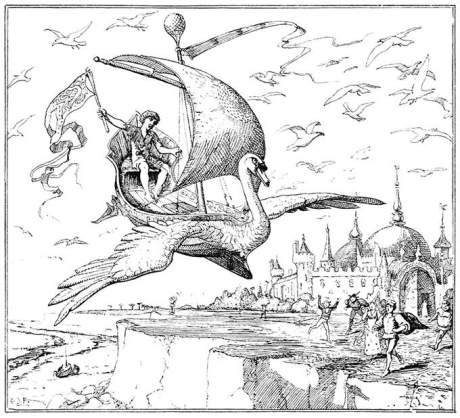
Heron’s formula has something clever to do with triangles, I think. Personally, I am satisfied that the sail on the swanboat in the picture above is a most definite triangle. I passed Shapes at kindergarten with flying colours.
Click this link to see which other poets are Tuesdaying.
Tuesday Poem (may involve link…)
February 2, 2016
http://plumwoodmountain.com/reading-the-frog-economy/
My poem ‘Reading the frog economy’ was just published in Plumwood Mountain, an online journal specialising in ecopoetry and ecopoetics. It’s a slippery wee beast of a prose poem, so hop on the webs (as in froggy feet, ha ha sorry!) and check it out, along with all the other poems in Volume Three Number One, as selected by Tricia Dearborn.
This frog is urging you to check it out,or he will turn into into Donald Trump, which would be somewhat less than ideal.

I do not understand this image…
Tuesday poem (or notes towards one!): A Great Perhaps revisited
January 25, 2016
A Great Perhaps revisited
the fantastic maybe
the I can’t believe it’s not heaven
the Ladbroke Lad’s uncertainty principle
the cliché feline done to death (and not done to death)
Rabelais lays down a beauty
the Artful Dodger’s silent handkerchief that never ends
caught in a pun, she giggled internally —
Pantagruellingly —
any more sir?
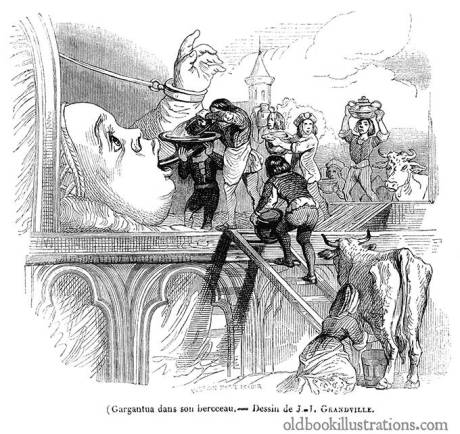
Baby likes ideas
So François Rabelais, author of Gargantua and Pantagruel, allegedly uttered the words ‘I go to seek a Great Perhaps’ on his deathbed. One thing for sure is that he loved a good rude joke and a spirit of anarchic fun pervades his works. I am playing with puns and physics and farts and different ways of envisaging heaven in the above. Dickens is dragged in too, although I do not think that any of his characters ever farted, even on a deathbed.
Far too much for a Lilliputian poem, but I rather like glutting on ideas from time to time.
Next week things will make more sense. That’s a promise. Peut-être.
 PS Cottier