Of poems and men: interview with Tim Jones
November 27, 2011
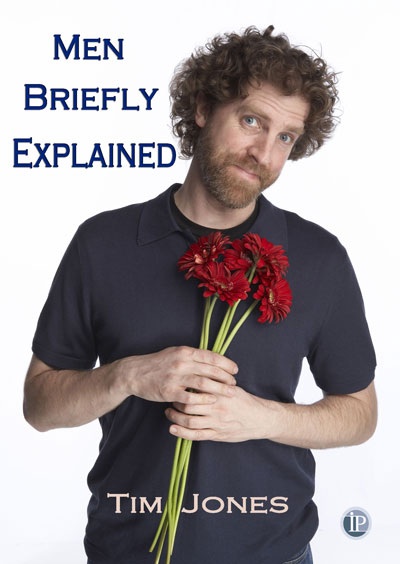
The subject of my first interview on this blog has just had published a book of poems called Men Briefly Explained. Brisbane-based publisher Interactive Press, which seems to be very active at the moment, has released this 64 page collection of new poems and works previously published in journals, and New Zealander Tim Jones has an approach to poetry that is at once delicate and amusing. I’ve been following his blog for a while now, where he tends to post a new poem every Tuesday, either his own or someone else’s. I decided to ask him five questions based on this new book, which is well worth reading.
I have never actually met Tim, and the questions and answers were sent by e-mail, so there is no spontaneous banter between the interviewer and interviewee, which may well be A Good Thing.
5 questions for Tim.
(And one bonus question.)
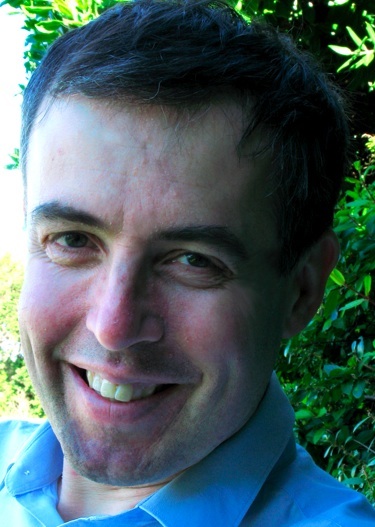
interviewee Tim Jones
1.There seems to be a sense in some of the poems of mourning for purely physical work; ‘…absorption into no-time, merely being and doing.’ (‘Men at Sea’.) Do you really regret the general loss of this type of work? (Obviously I mean in advanced economies such as NZ.) How does this affect men in particular?
It’s interesting that you point this out, because I wasn’t aware of that when writing the poems. I’m someone who spends far too much time sitting on a chair in front of a computer, and when I get the chance to do some physical work, I usually enjoy it very much. At the same time, from those times when I was younger and my work involved physical labour, I remember mainly the rain, the cold, the heat, and the boredom.
In New Zealand, as in many other countries, there has been a shift in employment patterns from manual work to intellectual work which has seen many men lose their jobs — and, at the same time, men are on average lagging behind women in educational attainment, at least at high school. So, although women still get the rough end of the deal when it comes to wage rates, promotion, and sexual harassment in the workplace, there are a whole lot of men who have either lost their jobs, or feel they no longer have work that fits them.
One of the main reasons we need less manual workers is because their labour has been replaced by that of machines, many of which depend ultimately on fossil fuels. In the longer term – maybe even the shorter term – we won’t be able to rely so much on fossil fuels, and perhaps manual labour will make a comeback. Whether that’s a good thing is open to debate.
2. Do you feel that gender differences are sometimes exaggerated? Much of the existential malaise in the poems would seem to apply to women’s lives as well.
There are biological differences between women and men which, I think, do have an effect on our behaviour – especially our sexual behaviour – but culture obviously has a strong influence as well: a classic example is that, although pink is these days regarded as a colour that is stereotypically and almost ‘genetically’ feminine, blue used to be the colour associated with women – it’s noticeable that the early Disney heroines have blue dresses.
So, even though my book is called Men Briefly Explained, I think one should be cautious about essentialising gender differences.
But the poems in the book are mostly written from my own experience, and so they reflect what I think and feel as a man. If women think and feel many of the same things as well, then that’s good … I think.
3. Does the male sex have a future? In ‘As you know, Bob’, you don’t seem at all sure about that. Following on from that, do you ever adopt a female persona or voice while writing? (May be a good career move, depending on your answer to the first part of this question…)
To take the second part first, one of the poems in the book, “Years with a Husband”, is written from a female perspective, and there are other such poems in my two previous collections. In my most recent short story collection, Transported, all the characters who have dialogue or play any significant role in the story “Said Sheree” are female – although I didn’t start the story with that intention, I guess it became my best attempt to pass the Bechdel Test. So yes, I do enjoy writing from a female point of view, although I doubt that I’m the best judge of how well I succeed at that.
“As you know, Bob” is about as close as this collection comes to science fiction – I extrapolate from some recent alarums about the future of the male gender, like declining sperm fertility rates. One of my favourite science fiction writers is Alice Sheldon, better known as James Tiptree, Jnr, and speculation about the future of the genders was one of her main themes. I suspect she thought the species would have a better chance of long-term survival if males could be dispensed with, and I can’t put my hand on my heart and swear that she’s wrong.
4. I love the way some of the poems (such as ‘As you know, Bob’, ‘Extras’, for example) manage to be both humorous and quite moving. The progress of young men forward ‘to our destinies, our mortgages’ from ‘Down George Street in the Rain’ is at once a very funny and sobering line. This fruitful ambiguity can be a difficult thing to achieve. Do you have to work at stopping yourself being merely funny, or slipping into the maudlin, or does that come easily to you? The book could be read as a type of memoir; does this have any particular dangers for the poet?
I’ve always enjoyed writing humorously – I only wish I could manage it at novel length, and then I could make my pile as the next Sir Terry Pratchett and slip gratefully into a garlanded retirement.
And, actually, I would have no problem with being funny and nothing more – I love humorous writing, think it’s very hard to do consistently well, and wouldn’t use the adjective ‘merely’ in connection with it. But the combination of funny and poignant is what seems to come naturally to me.
A lot of my poem has memoir-like, or even (quel dommage!) confessional qualities. I know that isn’t approved of by the academy, but that doesn’t particularly concern me. Men Briefly Explained is divided into three sections – the poems in the first section are based fairly closely on my own life as a child, a teenager and a young man; the poems in the second section are based mainly on observations of other men; and then, in the third section, I look ahead to the rest of life.
For what it’s worth, my poetry draws more closely on my own life than my fiction does.
5. Do you re-write your poems a lot, or do you carry them in your head until they are almost complete? Do you write at a particular time of day or night, and how do you manage if you have a paying job as well?
Many of my favourite poems arrive all at once, and my job is to race to pen and paper, or computer, before they vanish again. In this collection, “Honey Moon” and “Shetland Ponies, Haast Beach” are examples of poems that came pretty much fully formed, though I did fiddle with one stanza of the latter a bit.
On the other hand, “The Outsider” has four stanzas, and it took me a good five years between writing the first and second stanzas, and a while longer for the final two stanzas to arrive. That one took second place in a New Zealand poetry competition (even though the poem is set in Australia), so that made the wait worthwhile.
I find that I need to write poems and poem ideas down pretty quickly to capture them, so I rarely carry them in my head – but I do often think about them while out walking.
I have a part-time paid job, and have regular ‘writing slots’ that I try, not always successfully, to stick to. Whereas my fiction-writing tends to be confined to those slots, poems can arrive at any hour of the day or night.
6. Bonus question: What on earth are Swannis? (p 49)
‘Swannis’ are more properly Swanndris – a brand of outdoor clothing that’s very popular in New Zealand. I used it in the poem to denote a man adapting to a life alone in the south of New Zealand – they are associated with our myth of the tough, resourceful, yet inwardly vulnerable “Southern Man”.
***
You can find out more about Men Briefly Explained, and buy it direct from the publisher, on IP’s mini-site for the book.
On Tim’s Men Briefly Explained page, there are more options for buying the book, plus latest reader reactions and reviews.
I recommend that you chase it up, and fill your stockings with Men Briefly Explained. Tim will be interviewing me about my new book for his blog, over the next couple of weeks. And further interviews with Tim as the subject will be published on other people’s sites, as he continues on his epic Tour de Blog. All will be linked to his blog.
Little Nell’s death scene from The Old Curiosity Shop by Charles Dickens, ‘improved’ into a happy ending by an alien’s tool.
November 14, 2011
It’s been a good week for my fiction writing, which I generally see as a secondary function to poetry. I sometimes sneak prose poems into story competitions, and hope that the judges will accept the lack of plot and character development! My first small collection of ‘real’ stories, A Quiet Day, was published in 2009 by Ginninderra Press, and was just highly commended in the 2011 Society of Women Writers Awards in Sydney. The judge was Susanne Gervay, who is an established and prolific young adult and children’s fiction writer. (Here’s a link to her blog.) This was very gratifying for me. Susanne told me that there was a poetic element to my stories; I didn’t mention that this element is always threatening to eat the plot!
This week I am going down to Melbourne because my flash fiction ‘A Writing Unexpected’ won the Big West Festival Competition and I’ll be reading it at one of the events. That’s if the airport is open, as a certain President Obama is visiting Canberra this week. The only other problem with the awards being in Melbourne is that I come back to Canberra missing that city too much. I am still having withdrawal symptoms from Sydney last week.
My very silly story ‘Little Nell’s death scene from The Old Curiosity Shop by Charles Dickens, ‘improved’ into a happy ending by an alien’s tool’ was recently highly commended in a humorous story competition. You can read it here if you feel like something quite ridiculous, along with the other prize-winners. There was a special prize for the funniest title, and I thought I would win that!
I am such a pessimist that I focus on one typo I left in the story when I read it. Perhaps you will find it if you go there. There is no prize, dear reader, if you are a pedant too!
Speaking of US Presidents, I just read Stephen King’s new novel about the Kennedy assassination. There’s a real storyteller, like Mr Dickens was before him. I have spent many night with these writers over the years, running through the hours in a readerly marathon, totally absorbed. I just don’t have that narrative urge, but prefer the sound of words. They left plot off my mental Swiss Army knife, and put on extra tools for wordplay.
Which is why I’m mostly a poet, who dabbles, however seriously, in fiction. Here’s the link to my skimpy story again.

must adjust trope...
Dangerous ground
October 28, 2011
It’s so hard to write about love without being sucked into the great swamp of cliché. (That swamp is just near the level playing field and the field of dreams, incidentally.) Here’s a poem that attempts to avoid the swamp.
I’ve totally given up trying to make my poems copied onto here revert to single spacing; they just like to be double spaced. And who am I to argue with the muse of the computer?

Love
Dangerous ground, they say; thick sands
tending towards the gluggy, or cloying
like dessert wine, just too too sweet.
Roll it round your tongue and spit!
say the many, divorced from lingering,
an evicted dog’s cold fleas, itching.
But that is not it, that is not it at all.
I realise that now, tottering past forty,
smorgasbord stashed in past’s
crumbed pantry of regret.
Hungover with experiment,
trapezed into performance,
the gourmet becomes gourmand
or abstemes self into shape.
But the shape of love is not six-packed muscle,
nor even delicate lines of balletic grace.
Love is a vegetarian at the butcher’s,
gapes of bed-socks beneath ageing dreams
and the practised caress;
an ideolect of touch and lapping
curled like a cat in memory’s ample gut.
Stretching, it rubs against the legs of so far and thus good.
Then it stalks out into future’s thin twilight, hunting for self,
in the deep dear shadows of the you and the now.
P.S. Cottier
First review! Plus stars!
September 30, 2011
That’s to say this is the first review on this site. Fear not dear discerning blog-lover, I have written quite a number previously. Indeed, my reviewing efforts were once rewarded with the prize of $200 worth of wine by the ACT Writers Centre, as part of their annual awards. That’s what a poet calls ‘Breakfast’. I have the pleasure of judging the same award for book reviewing, sponsored by Z4 wines, this year.
And actually, I’m lying. There is a link here to a review written by a Canberra writer who calls himself or herself Poetix. So the review is not really here at all. I assume Poetix is a Canberra writer as the review of Canberra and Beyond by well known Canberra identity Bill Tully appears on the RiotACT, a Canberra-based discussion site about all things Canberran.
Sometimes you can have just too much Canberra.

For those 99.999% of the world’s population who have no interest in Canberra (which is the capital of Australia, for those overseas who have never heard of it) please enjoy this little poem about the frustrations of astronomy. The night sky differs between the hemispheres, but there are always stars.

Kicking the telescope
All this antic fiddling
when I wanted wonder
injected from you
like a syringe of pure white.
Fingers work, and thumbs,
in order to make a handle
of space, my grip as dumb
as a paralytic’s knee.
Perspicillim, sounds like
a Martian’s green-snot cold.
Ugly tripod, alien crouching,
on those three ungainly legs.
I swing mine to make a fourth.
You bow your one-eyed head.
P.S. Cottier

 PS Cottier