Tuesday poem: Last leaf
October 7, 2014
Last leaf
Does the tree despise
the last leaf
clinging to a twig
in brown nostalgia?
Is it the wind,
or thin fingers flicking
that drives it on,
and out, at last?
Eager ground calls it —
shepherds it down,
corralling nitrogen;
sequestering damp.
P.S. Cottier
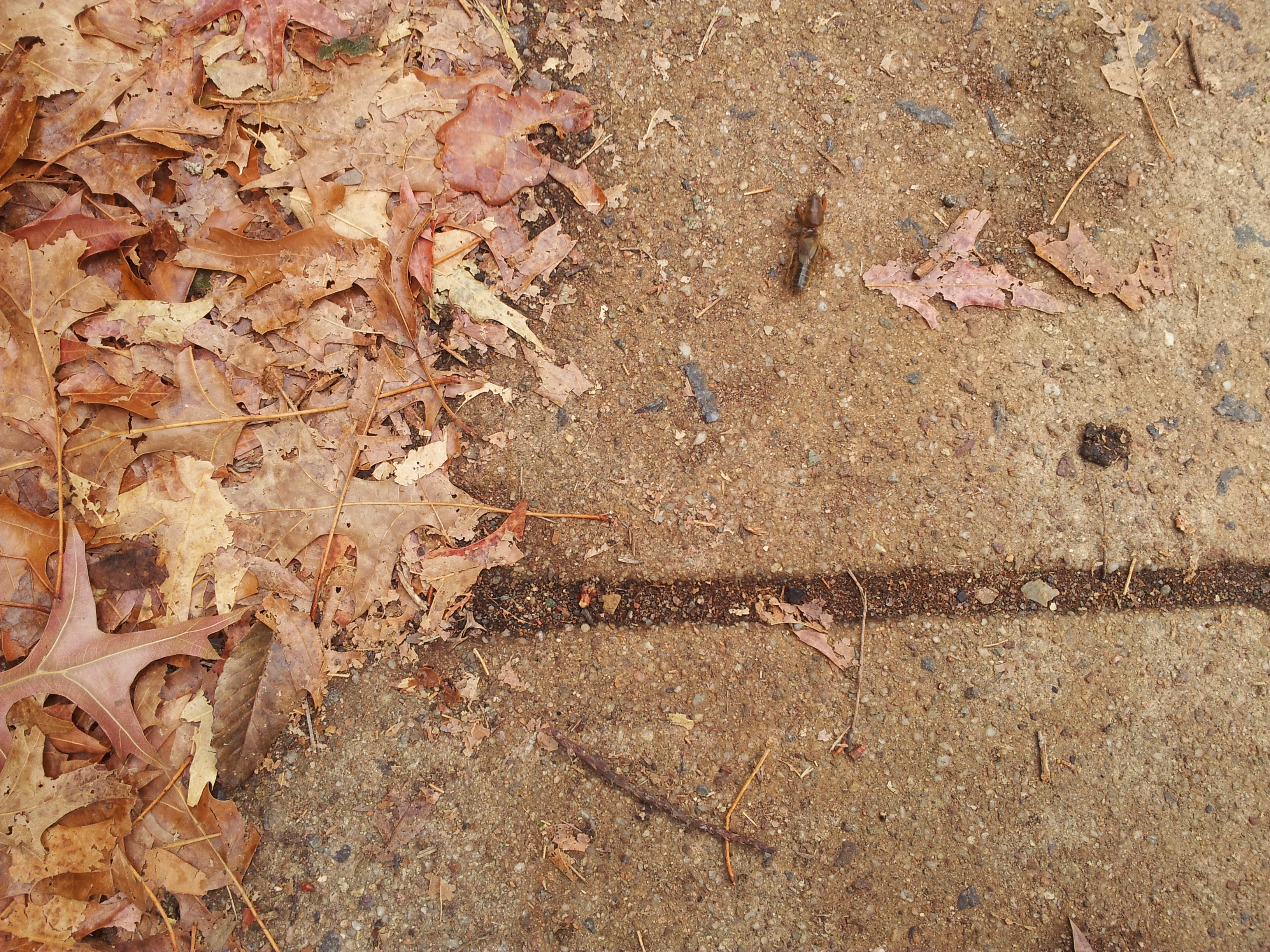
A surprisingly non-speculative poem for one who spent all weekend at a science fiction convention. And a surprisingly autumnal one for the beautiful spring weather in which it was written.
I was on two panels at the Conflux convention: one on editing anthologies and one on poetry. I may write a longer post about it when the energy returns. As the tree said to the last leaf.
Soon I should be receiving the entries in the ACT Writers Centre Michael Thwaites Poetry Prize for my judging pleasure. Second competition I’ve judged in a month, and the third this year. I may write a longer post about it…you know when.
Click this feather for further excellent poetic mulch:

Tuesday poem: Gabriel Grub’s Song by Charles Dickens
September 16, 2014
Brave lodgings for one, brave lodgings for one,
A few feet of cold earth, when life is done;
A stone at the head, a stone at the feet;
A rich, juicy meal for the worms to eat;
Rank grass overhead, and damp clay around,
Brave lodgings for one, these, in holy ground!

This little song appears in The Pickwick Papers, and was therefore the work of a very young Dickens. It is part of a very long history of funny, morbid gravediggers in literature, and is no doubt intended to trigger memories of Hamlet. The illustration, by Hablot Knight Browne, captures this beautifully. It is well worth looking at his other illustrations on Wikimedia Commons.
Gabriel Grub is like a prototype for Scrooge; the miserable man is reformed by exposure to a goblin, just as Scrooge will later be changed by the ghosts. Even in this early book (1836-37) we see how Dickens loved playing with names; a sexton called Grub singing of worms is just wonderful. Grub, unlike Scrooge, is often very drunk.
Asking if Dickens was a great poet is like judging an elephant on its ability to tap dance. It really is missing the whole point of the creature.
I don’t know if any other poets have posted poems about death, but I shall shortly press this feather, dropped by a hungry crow, and find out:
Faith, hope, love
September 9, 2014
Sometimes amongst the flow of evil events that we call ‘news’ you read something so beautiful that it seems to come from a different, kinder planet.
Or Iowa, in this case, where a lesbian couple who have been in a relationship for over 70 years were just married:
http://www.theguardian.com/world/2014/sep/08/ninety-year-old-gay-couple-marries-in-iowa
This story emphasises that the lives of ninety year olds can be as full of meaning and even excitement as those of people in their twenties. It also reminds people who tend to write off the United States just how diverse that country is. And how diverse Christianity is, too.
I hope that some day we will see such marriages in Australia. Civil marriages and religious marriages, for those who want them. If only most relationships lasted 70 years! To quote Corinthians:
‘But now abideth faith, hope, love, these three; and the greatest of these is love.’
(For once that is not the King James version, as that translates the last term as ‘charity’, which sounds a little odd to modern ears.)
This story is definitely the poem of the week. And I hope my complete lack of sarcasm may be forgiven by regular readers, for this week only!

Tuesday poem: Link to a found poem
September 2, 2014
I’ve been thinking about found poems recently, that is, poems made from bits of text found in other poems, or elsewhere (signs, newspapers, comments on blogs). Famously, Voltaire wrote that “Originality is nothing but judicious imitation. The most original writers borrowed one from another.”
I think recycling is a better metaphor. Although some types of recycling become vandalism: you know, where someone cuts all the pictures out of an old book, or makes a bag from an old volume of say, Voltaire. “Look, I’m an intellectual. I carry my smartphone in something that could once be read.”
But a found poem can be an interesting mutant. Something as dangerously delicious as a mushroom can sprout from other people’s words. A spore type of poetry? An unhappy monster?
Click this link to find a poem about a found poem who hates being just that. In fact, he is a lost and found poem, who finds himself at Verity La:
http://verityla.com/thy-poetry-and-thy-pathos-all-so-strange-ps-cottier/

Other Tuesday poets may have found their poems on the beach, or at least made them up from lines from letters in a number of bottles. Those which were empty of wish-granting genies, that is.
Click this feather, dropped by a seagull, and find out:
Tuesday poem: Wetlands haiku
August 25, 2014
perched on a log
damp bark transfers water —
my pink frog bum
P.S. Cottier

I do not fully understand this image…
Now that damp croak of a poem was written at a great event which was held in O’Connor, just up the road from where your poetic blogger lives. (That’s me, if you were wondering.) A group of people met, heard about the wetlands and haiku, and wrote a brimming bucket of the tadpole poems.
The event was organised by Sarah St Vincent Welch (writer) and Edwina Robinson (Urban Waterways Coordinator). There are lovely photos and more poems at the following link, including some more serious ones. But I am particularly chuffed by the photo that follows on from the poem, in which I am indeed perched on a log.
http://www.canberra.edu.au/faculties/arts-design/research/research-centres/cccr/publications/haiku
Canberra is a very lucky city, with features such as the urban waterways in the inner city. (If you are imagining a city such as Paris, or Sydney, please don’t. Canberra is not that type of place at all.) The waterways return some of the creek that flowed through this area to a more natural state after it was concreted at some stage. Philosophically, it is an interesting question whether these recreated ponds are ‘natural’, but I am pleased that they exist.
Similarly, is haiku in English actually haiku? Is a haiku that contains a rhyme a proper haiku? Should we worry about such notions of form and purity?
Or should we just play?
Press this feather, fly to New Zealand, and read even more poetry:
<

