Tuesday poem: Limerick
September 15, 2015
There was a young lim’rick called Brian,
Whose rhyming was most far from fine:
Critics laughed and then pointed
And said ‘He’s disjointed!’
Which hurt the young lim’rick called Brian.
P.S. Cottier
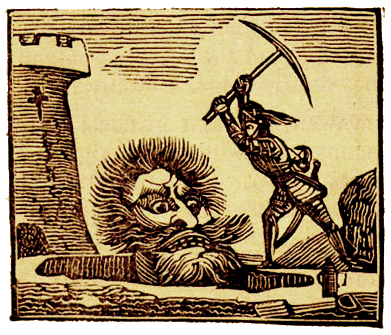
Those who think I should hang my head in shame do not know me very well. I will take play over dry reflection any day. Also, there was an excellent limerick feature in a recent issue of Poetry (the gorgeous one from Chicago) by Anthony Madrid, and who am I to argue with that?
Next week, however, I promise to be more serious, as befits one who is web-linked to other poets.* Read the works of the other Tuesday Poets around the world by pressing here.
*That is a promise in the same sense that a politician promises to stick to policies. A politician is a politician, however well he or she wears a suit. Australia’s new PM has the most lovely suits.
He is risen indeed!
April 5, 2015
He is risen indeed!
— like Daniel Vettori, one-handed catch,
or Wingard marking like a boofy angel,
or Medhurst steadying before the net,
but with no ageing, no hamstring tweak,
and no second division.
And one day, we will see his face.
Perhaps tomorrow, or Tuesday week.
P.S. Cottier

Now, for benighted foreigners/those from non-cricketing, non-netball, non Australian Rules Football nations (for I hear that such places actually exist):
* Daniel Vettori is a cricketer who plays for New Zealand, who took a spectacular catch on the boundary in a recent World Cup match. I shall say no more about the eventual result of the tournament, although the word ‘plucky’ springs to mind. (Or plucked.)
* Chad Wingard is an AFL (Australian Football League) player who took a fantastic mark playing for Port Adelaide in a match against St Kilda last season. (A mark is where you leap up to catch the ball, often using another player as a fleshy ladder.)
* Natalie Medhurst is a prolific scorer in the Australian netball team, who exemplifies calmness and accuracy under pressure.
The ‘he’ of the title is rumoured to have been born in a non-cricketing, non-netball, non-Aussie Rules playing country. Can this possibly be true? (-: I shall try and understand this as I eat my weight in chocolate.
Tuesday poem: A persistence of jellyfish
March 3, 2015
a persistence of jellyfish
flesh liaisons bloom
sea-flowers have no soul
P.S. Cottier
‘sea-flowers…’is from Jules Verne, 20,000 Leagues Under the Sea

This bluebottle is the sort of lovely Australian creature that delights visitors. The image (PD Wiki Commons) is very fine, but doesn’t show the long tail of the creature, which is the bit that stings.
I have a vivid memory of swimming out of my depth, when one of these wrapped around my arm like a mad doctor’s blood pressure tester. I had to swim to shore, against a slight overtow, with a band of pain tightening around one of my arms. I developed a delightful weal on my arm, resembling a string of rubies given by a particularly sadistic Prince from a fairy tale by Angela Carter.*
At the time, I didn’t know how bad the sting of these creatures was, in terms of how poisonous. Fortunately, they are not too bad for most people, unlike the small invisible jellyfish found further north, which are deadly. (Some people have bad reactions to them though, as with bee-stings. See this article.)
Interestingly, the bluebottle is actually a co-operative of creatures that band together, rather than a single life-form. I believe that these are the sorts of things that we will find on other planets. ‘Other planets’ here means the south coast of NSW.
I believe that Australian wildlife may be touched on in the central Tuesday Poem this week. Press this link and find out.
*UPDATE: I have been flicking through other posts by Tuesday Poets, and just noticed that Helen Lowe is featuring a poem by Tim Jones about Angela Carter. There is an absence of jellyfish in the fine poem, but the coincidence tickled me. Like a bluebottle, but a lot less painful.
Galaxia Fairfaxia: The Journey on the Good Ship Review
March 1, 2015
The Stars Like Sand: Australian Speculative Poetry was just reviewed for the Sydney Morning Herald, Canberra Times and elsewhere. A lovely review by Peter Pierce, which states that the book is a ‘splendid anthology, that entertains from start to finish’. Adjectives such as ‘enterprising, unusual and rewarding’ are used, which is always a good thing, providing retrospective solace to editors on their long trips through the unknown reaches of the poetic universe*.

Seek out the book here, or, if necessary, through those on-line bookstores.
You could even ask a physically constituted bookstore to order it for you, you intrepid little time traveller you.
*’Poetic universe’ is here defined to mean Australia; a small solar system on the outskirts of the English Andromeda.
Remembering 1816: Two hundred years since Frankenstein was conceived
February 7, 2015
Remembering those who gathered in 1816 by the shores of Lake Geneva, along with monsters and vampires
We’d all be Byron, if we could;
titled, desired, trangressive.
What wouldn’t we all give
to write Mary’s monster half as good?
Or to pen Ozymandias,
and find ourselves anthologised,
with the glamour of one who died
as young as PB. There’s a bias
towards such as he, or Jimi Hendrix.
Mary Shelley lived a longish life
but many cast her just as the wife
of genius drowned. As if she were thick!
Yes, in our hearts, we opt for glory.
Pity we’re all Polidori.
P.S. Cottier

Polidori was Byron’s doctor, who accompanied the poet to the villa he rented near Lake Geneva, where he hosted his friends Mary and Percy Shelley.* They read ghost stories and composed their own. Mary came up with the idea for Frankenstein, and Byron wrote a fragment of a vampire novel. Polidori wrote the first full length vampire story written in English. When published it was attributed to Byron, who denied authorship. It is still listed as written by Byron in various catalogues. You can see how keen someone was to attribute it to Byron in the image above!
Polidori has had a bad rap; an anthology of vampire stories I am reading prints not a paragraph of that first novel, on the basis that the author was a ‘hack’. I am also beginning to read his book (The Vampyre: A Tale) and it’s true to say that the prose doesn’t sing:
“THE superstition upon which this tale is founded is very general in the East. Among the Arabians it appears to be common: it did not, however, extend itself to the Greeks until after the establishment of Christianity; and it has only assumed its present form since the division of the Latin and Greek churches; at which time, the idea becoming prevalent, that a Latin body could not corrupt if buried in their territory, it gradually increased, and formed the subject of many wonderful stories, still extant, of the dead rising from their graves, and feeding upon the blood of the young and beautiful.”
My poem above is, to some extent, about our tendency to feed upon the ‘young and beautiful’ after they die, at least.
Poor John Polidori died very young himself, like Percy Bysshe Shelley and Byron. He was best known for who he associated with; a groupie, not a musician. There is some evidence that he committed suicide, but this is controversial.
The poem deals with the way that most writers, whether poets or novelists, far fall short of the Shelleys or Byron, and most musicians are not Hendrix. That does not mean that nothing worthwhile can be written by those ‘silver poets’. It just means that some people seem blessed with an additional talent to take what was around and transform it into something instantly recognisable as new. A glamour, perhaps, to use that word in an old way meaning spell or magic. A blessing is another word that could be applied. Some use the word ‘genius’, and surely that reminds us of something magical, that grants wishes?
Next year is the 200th anniversary of that meeting on the shores of Lake Geneva, and I hope to write a lot about Frankenstein and his monster this year. Let’s praise the genius of Mary Shelley who took scientific ideas of her time and created a profoundly moving tale that examines what it is to be human.
By the way, there was another visitor in Byron’s house in 1816, who is not mentioned in the sonnet; Mary’s stepsister, Claire Clairmont, who had a child in 1817. Byron was the father.
(Public domain image from Wiki Commons.)
*They were married in late 1816, after the famous meeting, but I’ll use the name under which Mary became better known here.
 PS Cottier