Madness and punctuation
May 29, 2009
Am I mad? Sometimes I think that I have a particular disease that makes my eyes see things that others don’t: the misplaced apostrophes with their little bracketed eyelids smiling as if to say ‘Yes, we’re here, it’s true’ or more accurately, ‘Yes, were here, its’ true’. (Insert long scream of Munchian proportions. I actually saw an its’ the other day. Them’s true words.)
Am I the only person still to wince,
to feel as if she had been pinched
by the claws of these evil crabs
with their crooked apostrophes?
Scuttlers’ of near illiteracy
I drown in your misplaced seas’.
(Of course that won’t work unless I used a font with nice curved apostrophes like claws. Please just use your imaginations…)
As for me, I think vodka is the only answer. It’s a nice blank canvas of a drink, punctuated by a neat, oval full-stop of a single olive, with no apostrophes in sight.
Cheers’ (Scream…)
Had we but world enough and time
April 3, 2009
How long to wait before assuming a piece has been rejected? When do bad manners or sloppy practices or simple overwork slide over into the world of too long, allowing a conscientious writer or poet to submit her work elsewhere? How do we decide where to send our poetry?
As to the latter, well, I went through a stage of deciding merely by name. I thought that if a journal had an imaginative title, it was probably likely to publish interesting work. Sometimes I did this sight unseen, and have been very pleased. Shakespeare’s Monkey Revue, for example, attracted just because of that title, and the journal didn’t disappoint when I saw it.
I have been advised to take a more sensible approach to where I try and place work. I am grateful for that advice, from a very well-respected and, more importantly, accomplished poet. There is a definite hierarchy of literary journals in my homeland Australia (and elsewhere of course). But I am not a poet because I want to build a career, or because I want a sparkling CV. On the contrary; poetry should be an escape from that type of world. I love the idea of people who like poetry reading my work, rather than worrying about status.
A similar question is: how much time should one put into trying to receive funding for one’s artistic endeavours? Some poets seem to spend as much time writing applications as sonnets. They might as well get ‘a real job’ and write in their spare time, so relentlessly do they work at chasing the Government dollar. And the whingeing! It’s as if they think they’re Shostakovich and the funding body is run directly by Uncle Joe, when they lack both talent and any real cause for grievance. (For my mythical foreign reader, most funding in Oz is public, not philanthropic.)
One would be mad to ignore the possibility of assistance in pursuing one’s art, but equally insane to sacrifice art for the pursuit of money.
But here’s a funny little one about the way poets often work for free:
Will work for print
I can do sarcastic.
I can do elegaic,
but controlled, you know,
no red hearts or roses
strewing graves.
I am indeed bereft
of the word bereft.
I’ve dabbled in spiritual.
I do a very good dog:
snuffling, truffling, worshipping
at a scented shrine, one leg cocked.
I can even do decent rhymes
if pushed. And if there were time
I’m sure I could run to a novel
in verse. (But that might be cheating.)
So for all your poetic needs
call the number on the little
paper tags fringing the bottom
of this hula page. And ask for me.
P.S. Cottier
Joy (or at least a certain satisfaction) should be the poet’s main reward. If one is lucky enough to have enough, why complain? People write poetry in jails and where there is virtually no hope of publication. This, surely, is what any art should be about? Something that even the sloppiest journal editor can never steal? (Let’s end where we started, with a bracing question mark.)
bats, owls, hedging your bets
February 2, 2009
‘There are dark shadows on the earth, but its lights are stronger in the contrast. Some men, like bats or owls, have better eyes for the darkness than for the light.’ Charles Dickens, The Pickwick Papers
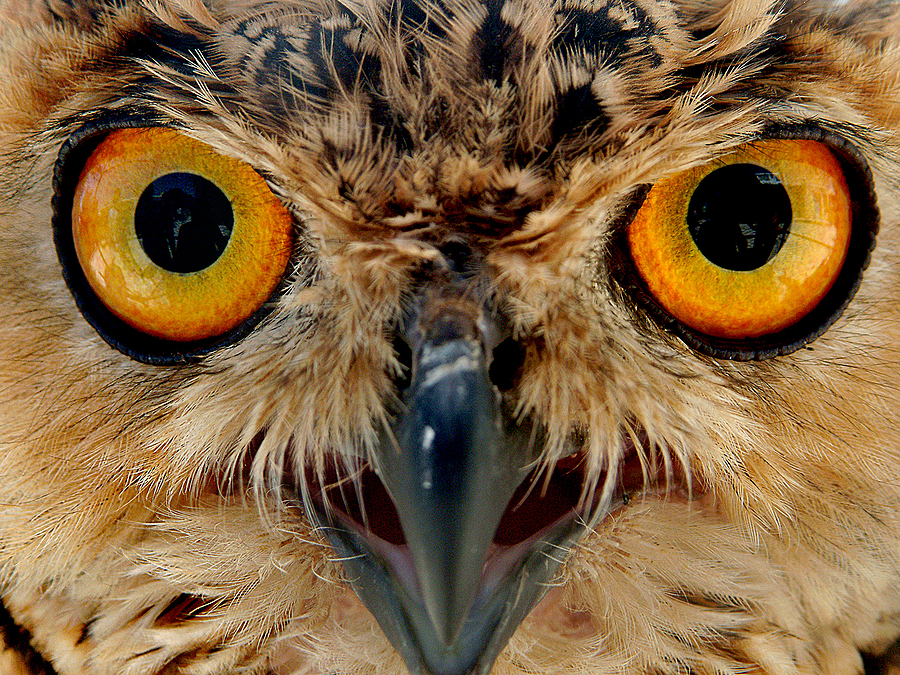
I see even better than you, Mr Dickens...
Who do we compare ourselves with when writing? During the process itself, all comparison should surely be banned. But upon reflection, it’s inevitable that some influences become clear, and that some assessment of ourselves against others takes place. This self-criticism is the only kind that really matters, after all.
It would of course, be hugely unproductive for a novelist to set out to be ‘as good as Dickens’ or a poet to set herself up as the next Milton. Unless one is psychotic, such reckless confidence would be bound to end in failure. But if one just occasionally finds a teaspoon of the richness of invention shown by Boz, or a tinge of his humour, that should be more than enough. (It’s hard to imagine any comparison with Milton bringing comfort. Apart from a mythical creature who is writing several volumes on the history of physics and the creation of the universe in rolling, unstoppable Big Bang rhyme. And if you are that person, the word ‘ambitious’ is probably apposite, dear little Satan of science.)
To look at one’s writing and say ‘it’s not as good as X’ (if X is not a joke) is to look at things through the night-coloured glasses Dickens evokes in the quotation given above. Far better to say does this represent a development of my own voice? Your own voice is inevitably formed by the previous words of others, but this should be a liberation, not a restriction.
At the same time, until you have read and continue to read as much as you possible can of writers good and bad, you will not have the framework for honestly assessing your own work. Creative writing courses that encourage people to ‘write what they know’ without seeking to increase their knowledge of literature are hideous aberrations. To write is to enter the maze of all that has been written before:
‘…mazes intricate,
Eccentric, intervolved, yet regular
…when most irregular they seem’
(Milton)
You’re never going to get out of that maze. Most will sit and look at single leaves growing on the hedges making up the maze, and try to describe them, rather than reaching the centre where Milton and Dickens (and others) are having an endless Pickwickian picnic. (Milton at a picnic is a terrifying idea, incidentally.) Given they do this carefully and respectfully, with humour, emotion, inventiveness, or with hedge-trimming satire, nothing could be more valuable. If we just blunder along, relying on nothing but luck, the result will probably be less than enlightening.
 PS Cottier