Tuesday poem: ‘Clancy of the Overflow’ by A.B. (Banjo) Paterson
January 23, 2012
I had written him a letter which I had, for want of better
Knowledge, sent to where I met him down the Lachlan, years ago,
He was shearing when I knew him, so I sent the letter to him,
Just “on spec”, addressed as follows: “Clancy, of The Overflow”.
And an answer came directed in a writing unexpected,
(And I think the same was written in a thumbnail dipped in tar)
‘Twas his shearing mate who wrote it, and verbatim I will quote it:
“Clancy’s gone to Queensland droving, and we don’t know where he are.”
In my wild erratic fancy visions come to me of Clancy
Gone a-droving “down the Cooper” where the western drovers go;
As the stock are slowly stringing, Clancy rides behind them singing,
For the drover’s life has pleasures that the townsfolk never know.
And the bush hath friends to meet him, and their kindly voices greet him
In the murmur of the breezes and the river on its bars,
And he sees the vision splendid of the sunlit plains extended,
And at night the wondrous glory of the everlasting stars.
I am sitting in my dingy little office, where a stingy
Ray of sunlight struggles feebly down between the houses tall,
And the foetid air and gritty of the dusty, dirty city
Through the open window floating, spreads its foulness over all.
And in place of lowing cattle, I can hear the fiendish rattle
Of the tramways and the buses making hurry down the street,
And the language uninviting of the gutter children fighting,
Comes fitfully and faintly through the ceaseless tramp of feet.
And the hurrying people daunt me, and their pallid faces haunt me
As they shoulder one another in their rush and nervous haste,
With their eager eyes and greedy, and their stunted forms and weedy,
For townsfolk have no time to grow, they have no time to waste.
And I somehow fancy that I’d like to change with Clancy,
Like to take a turn at droving where the seasons come and go,
While he faced the round eternal of the cashbook and the journal —
But I doubt he’d suit the office, Clancy, of “The Overflow”.

'...that is all/Ye know on earth, and all ye need to know.' (?) The sun seems to be located near Broome.
Yes, I’m going into fervent Australian mode as Thursday 26th January is Australia Day, or as some like to call it, Dags with Flags Day. Anyone who dabbles in this blog will now that criticism of aspects of Oz society is rampant to a positively un-Australian degree, so this classic 1889 verse from Banjo Paterson may raise me back to the golden realm of unadulterated, frolicking patriotism. (My shallow cynicism is in fact a cover for an embarrassingly gushy love for this country, but let’s pretend I’m not feeling that at all, shall we? Love is so much harder to write about than anything else, and I wouldn’t want to fall short.)
Actually, I love this poem too, particularly the ‘thumb-nail dipped in tar’. The longing for the pure realm of the bush that this poem exemplifies is something that still marks Australian poetry. Ask anyone where the best-known Australian poet lives today, and they’ll point to Bunyah and Les Murray, not to Sydney and…anyone in Sydney.
The suspicion of the urban environment, even in one of the most urbanised of economies, also lives on, I think. Real men are out there somewhere, with the kelpies and the sheep, in the ‘virginal’ bush, roaming as free as the public domain status of this poem. (Just don’t mention the previous ownership…I don’t mean the poem.)
A word about flags. The Australian flag is definitely seen much more than it was when I was a child. Not on public buildings so much; I remember having to recite something like ‘I love God and my country/ I will honour the flag/ and cheerfully obey my parents, teachers and the law’ at primary school. Boys actually saluted the flag during this, while girls preened and made scones. But today we do see more private display of the Australian flag. Is this:
(a) because we ape America in everything, even flag-waving, although it’s a different flag?;
(b) people have more money, because of our flogging huge amounts of iron ore and uranium (and other good stuff) overseas?; or
(c) flags are cheaper now, and we receive millions of plastic ones back from the countries we sell huge amounts of iron ore and uranium (and other good stuff) to, in an equitable and sensible exchange?
I really don’t know, but I find these public displays of private flags very strange indeed. I worry about how their display might be related to charming bumper stickers such as ‘I Grew Here You Flew Here’, and ruder variations thereof. Not that you see many of them in Canberra: you’re more likely to read ‘Refugees Welcome’ in the ACT. But as I hear constantly, Canberra is not Australia.
Enough. Screed is bordering on The Burning Slough of Rant.
If the cloying smell of cattle or the sticky feeling of the wool emanating from this piece is disturbing you (or perhaps the premature reek of a million sausages on a million barbies is getting up your nose?) please head over to the Tuesday Poem Site, where the vowels may be a little rounder and the patriotism seems slightly more occluded, at least from a distance. (Until the next rugby thing, anyway.)
Launch of The Cancellation of Clouds
October 21, 2011

This is the cover of my third book, with a somewhat pensive sheep under a very blank sky. (It’s a poetry collection.)
Hal Judge launched The Cancellation of Clouds at 6pm, Thursday 20th October 2011 at Smiths Alternative Bookstore, Alinga Street, Civic. (Civic is another name for Canberra’s ‘city’ centre – a non-existent thing, really – and the name is intended to contrast with political, governmental, national Canberra.) Hal gave a very thoughtful speech, and I read a few poems, and drank a poetic amount of wine. Senator Nick Xenophon, an independent Senator from South Australia, also read a poem, after he launched the bookstore’s new bar.
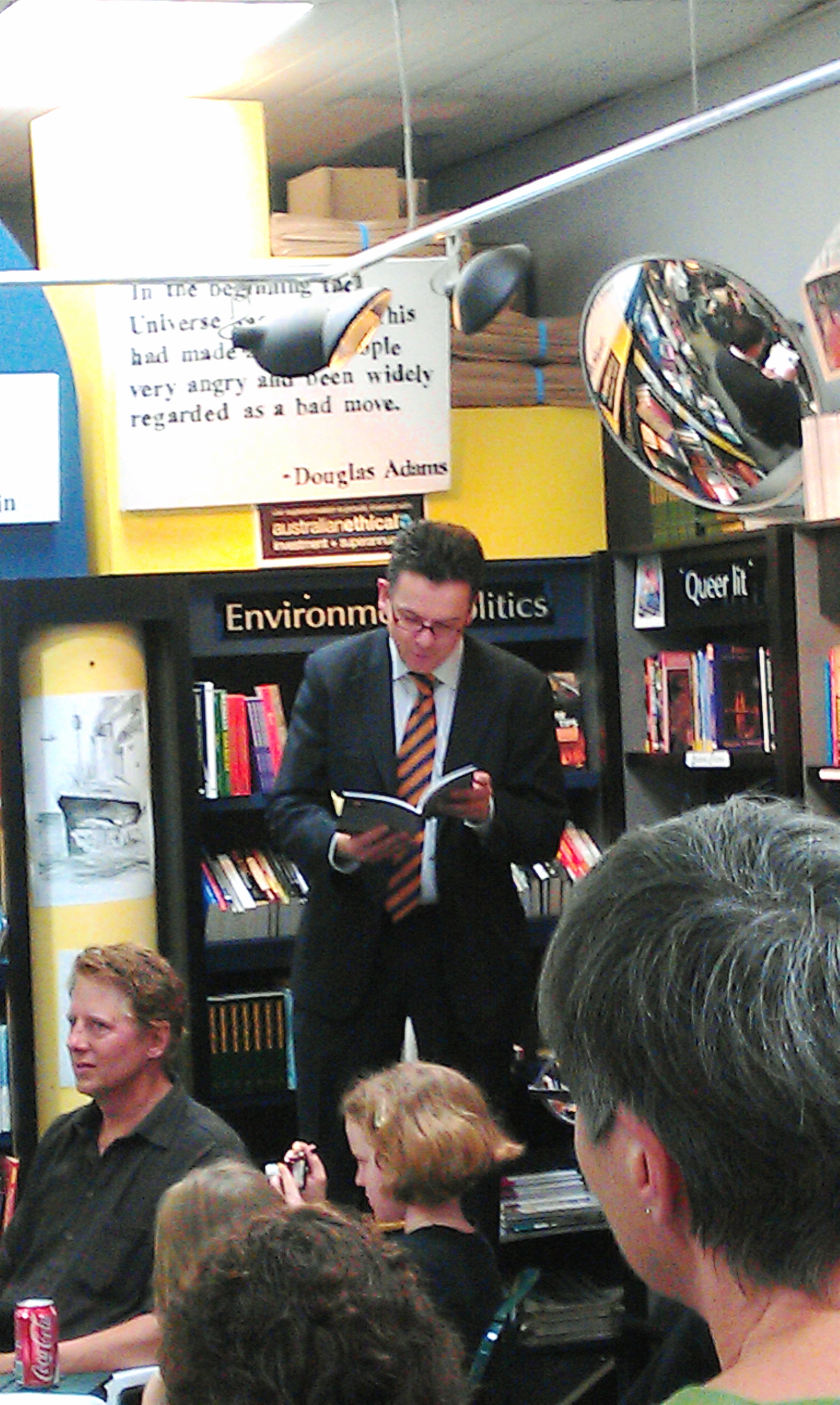
Senator Xenophon takes a gamble
(Thanks Lily Mulholland for this photo.)
If you would like to order the book, please go to this page, within the Ginninderra Press site. The first review of the book, by Professor Peter Pierce in The Canberra Times, describes it as ‘droll, intelligent and varied’, which was a very positive thing to read. And totally right, too! Another reviewer, Michael Byrne, states that ‘It is…love for (and embracing of) the different that seems to define Cottier as a poet.’
And in the book’s first international recognition, New Zealand poet and man of letters Tim Jones describes The Cancellation of Clouds as an ‘Australian poetry collection with a distinctively wry yet dark tone and very effective use of long stanzas and densely packed lines.’. All very gratifying, especially hearing I’m more dark wry than white bread…
***
Now I return you to the real piece that bears the title given above. I originally wrote what follows below back on January 22, 2009, and it still seems a good inclusion for my blog, although I notice a recent trend to write a little more often here than I did originally. For a long time this was the first post the reader saw on my blog, and I only recently allowed it to move away from its ‘sticky’ position on the first page.

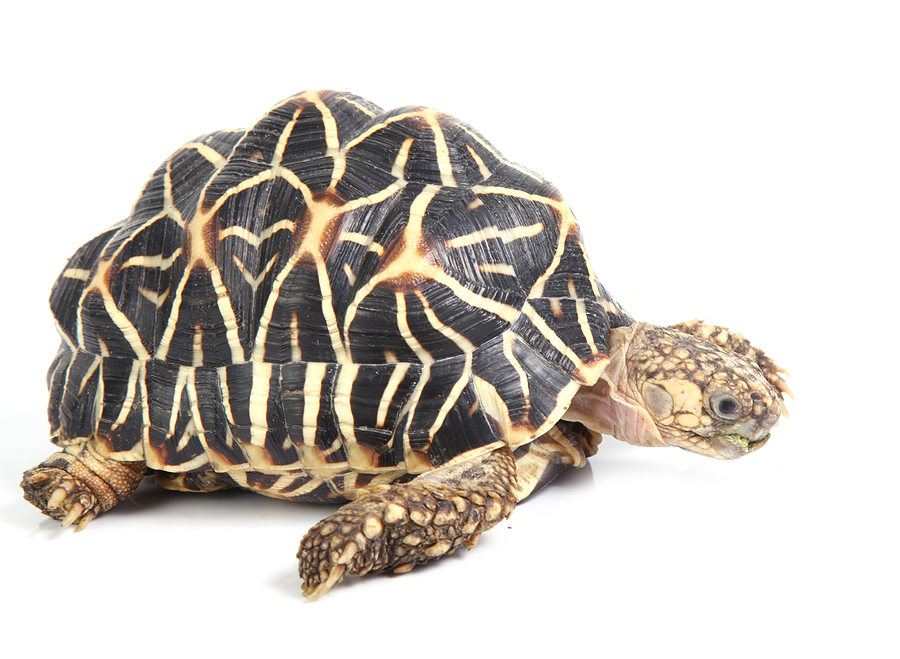 Cicadas and tortoises. And poetry?
In my case, cicadas and tortoises seem apt metaphors for the process of writing. My first book, The Glass Violin, a poetry collection, has just been published by Ginninderra Press. Some of the works in the collection go back twenty years, so the easy option of comparing myself with a tortoise comes to mind. There’s nothing like a good old shell of cliché in which to hide an idea.
Yet I actually write quite quickly. I’ve just been a shocker about trying to have my work published. About a year ago I decided to put an emphasis on seeking publication, and I have been quite fortunate in finding places that liked my work.
Cicadas spend most of their life underground, only emerging after years and years to produce an ear-splitting cacophony. They only live a short while after emergence. As a practising poet, I feel a lot like one of these insects, pushing through editorial mud, but hopefully the process of publication has just begun. I wrote this poem about the vocabulary used for referring to poets as emerging, developing and established:
Emerging poets
White, shovel-shaped finger-nails,
rotten smell, the world’s worst bulbs.
Like durian fruit mushrooming,
zombie poets emerge, pushing
through editorial soil, groaning,
after a decade’s slushy stew.
Perhaps some emerge politely,
quaint chicks toothing oval eggs.
Others make neat papier mâché
cocoons from rejections, wait,
then one day, poof! Harlequin
wings, trembly antennae. Most
are born bogongs, banging on
bright lit windows. Any more sir?
(I like to think that my poetry is a little more melodic than the noise of a cicada, although this example is admittedly a little less than elegiac. Incidentally, all poems on this site are by me, unless otherwise indicated.)
This will be a very occasional blog, as this cicada prefers to work on her poetry. It’s always a temptation to bury yourself away, once the soil has been so very comfortable for so long…

I was very happy to read this review. And this one, too.
And since then, a second book, this time a short collection of short stories:

Both can be ordered from Ginninderra Press, under poetry and fiction respectively.

the opposite of poetry?
July 14, 2011
Limericks are meant to be obscene, or at the very least, scurrilous. The strong ‘message’ and the clunky rhyme pattern make them a very particular form of poetry. One could not, I think, write a moving or sensitive limerick; that’s a different KOF, to be poured into a sonnet or free verse.
But where the expressed views of a public figure seem crude and somehow thoughtless, the limerick is the best form of poetry there is. Here’s one about the current Leader of the Opposition in Australia, Mr Tony Abbott, whose political position on climate change seems to be entirely based on crude populism. (Not that Julia Gillard’s government is a shining example of The Mind Made Flesh, but still…)
And I promise not to do the limerick thing again for a while. Please excuse double spacing; for some reason my computer ‘does this’ sometimes, and won’t listen to reason. Which actually seems appropriate for this little poem‘s subject.

My budgie slipped out...
There once was a leader called Abbott
who criticised just as a habit.
The climate did fry
and he couldn’t say why
which bemused this nay-saying maggot.
P.S. Cottier
Muse-sick
May 6, 2011

I am about to embark on a fortnight’s total immersion in music. Sounds like acoustic water-boarding, but it’s a matter of choice. The Canberra International Music Festival runs between May 11th and 22nd, and I’ve splurged on a gold pass, which means I can attend all 34 concerts, should I so choose.
I find that the ‘jet-lag’ caused by embarking on the long-distance haul triggers connections in my brain that otherwise lie dormant. That’s once I get past the lurking feelings of inadequacy that great music always creates. Sometimes I feel that poetry is music’s poor relation, being tied too much to meaning. But then another vodka kicks me past this, and the synapses stimulated (or created) by the baptism in sound can be put to good use, emphasising the noise that words make, and twisting meanings into improvised forms.
Here’s a little poem about the feeling that others (or Others Unseen) are somehow more perfectly creative. (Interestingly, I searched Bigstock for an illustration combining music and snails to go with the poem, and found the image above. It’s comforting, in a way, to know that someone else’s mind has been where mine has!):
Even snails
Peg loves looseness, envies river of sheet,
flowing down from plastic clench of beak.
Milk would carve itself into solidity, escape
sloppy white seascape into certainties of cheese.
Poet would be musician, shed sad bad husks of words,
sprout into airier art, so eary and so letterless.
Sliming through house-heavy dirt,
even snails may dream of wings.
P.S. Cottier
Update 11th May
Just returned from sitting in an exposed position on concrete on a wet piece of rubber listening to William Barton and an organist play some interesting music. (Barton’s own composition and some Philip Glass.) But I really couldn’t concentrate or enjoy the experience, as it was just too cold. There’s no way that concerts should be staged in Canberra at 7am at the end of Autumn. There’s a real martyrdom for music attitude amongst some of the attendees at the Canberra International Music Festival. I simply had to leave early as I felt I might get hypothermia. I obviously don’t have the right attitude. And the event was very difficult to locate for those of us who got there early, which added to my general festive spirit.
Unbelievable comment from one fellow attendee when I commented that I hoped the performance was not cancelled due to possible rain damage to the instruments: ‘Oh no, it’s only a didjeridu’. 40,000 years of culture belittled. Hats off to you, dickhead. (Although there’s no way I would have removed my hat due to possible frost-bite.)
Previously I saw William Barton as one of the musicians in a concert at the Fitters’ Workshop featuring Sculthorpe’s Requiem, another requiem by Tomas Luis de Victoria and a setting of ee cumming’s ‘I thank you God for most this amazing day’ by Eric Whitacre. I wasn’t too keen on the last one, perhaps because that poem is so near perfect that the music seemed, for once, to detract from its beauty.
The event was co-sponsored by the Spanish Embassy. A Spaniard (I think she was, anyway) pointed out that there were several red-backs nestling at the edge of the concrete of this old industrial building, including one enormous one. I agreed that it was better to leave them alone, rather than stir them up into possible vengeance (a pun about red-backs and bulls was stifled on my tongue). I found myself explaining how the really big ones are female. I hadn’t expected to become a junior David Attenborough at the concert, I must admit. No doubt she’ll have a story to tell back in Spain: (‘..and they have horrible spiders, even at musical venues…’)

 PS Cottier