Tuesday poem: Storming teacups
January 16, 2012


Storming Teacups
I sit with friends outside the café, cup in hand, and fix the world’s problems. I am the cappuccino kid, frothing with anger. I am the peppermint tea with honey, busybeeing everywhere.
I start to collect china as others gather books. My coffee cups speak volumes. I have a small expresso cup, decorated with Aboriginal designs. Is this how I visualise Aboriginal issues? A storm in a coffee cup, a far-off cyclone in Darwin? A Town Called Redfern, where blood has stained the concrete, as there isn’t much wattle around? I sip, and cradle the fragile, storming cup, enjoying my bitter short black. My frown replicates the lines on the cup, as does my smile.
I have a larger, more solid cup which boasts a kangaroo and emu rampant, and the words “Commonwealth Parliament”, proud as any bumper sticker. This capacious cup and saucer was Made in England. It says so on the base. This is a cup for Indian tea, a cup for colonial sipping. I wear a long white dress, a hat to shade my skin and I practise swooning. The cup, however well made, seems to be cracking around the sides, and a small cleft runs from the word Made past the emu. Surely my firm cup will not break, my crest shatter? I delicately place the cup back on the saucer, and the fault-line is hidden.
I have an old cup which says “Buy Nicaraguan Coffee”. Now that things have changed again south of the biggest border, which coffee should I buy? Perhaps the one that tastes the best. A favourite cup of mine is the one that states “Freedom for Women: Women for Freedom”. The tea-lady pours her liquid into this cup, but somehow she doesn’t look particularly free. Her tea makes me insatiable, and the phrase “dry as a witch’s tit” is conjured up from the steam, cloyingly.
But who would smash a cup? They are useful. They are decorative. I stroke my china pets, these devices for drawing boundaries between air, liquid and table. My extrovert cups hold in our conversation, delineate the possible from the flowing surge of ideas. We sit, cups in hand, painting new worlds like flowers on porcelain. I put out my little finger to hook the fishy thoughts which fly from the cup, through the air, challenging our demarcations.
*
This work (prose-poem? creative non-fiction?) was written way back in the Old Days of 1993, and published in Blast magazine. This brings back so many memories, not least of one of the friends mentioned in the first paragraph, Lindsay Croft, a young Aboriginal man killed in a car accident in the United States while visiting Native American reservations, about a year after I wrote this piece. This gives the work a far more bitter taste, for me, than it would otherwise have.
For excellent poetry fixes, go to the Tuesday poem site. They’re be everything from expresso to latte, I can assure you.
11.22.63 by Stephen King
November 17, 2011
Here’s a link to my review of 11.22.63 by Stephen King, a time-travel novel about trying to prevent the Kennedy assassination. The review was just published in Eureka Street. Today, President Obama has been in Canberra, and fortunately, that visit by a US President to the South seems to have gone a lot more smoothly. I travelled back from Melbourne to Canberra today, and we taxied quite close to Air Force One. Amazing to see a plane treated like a celebrity!

When you witness the level of security that necessarily goes with a visit from the US President, it makes you very glad to be living in a less important country, globally speaking.
Launch of The Cancellation of Clouds
October 21, 2011

This is the cover of my third book, with a somewhat pensive sheep under a very blank sky. (It’s a poetry collection.)
Hal Judge launched The Cancellation of Clouds at 6pm, Thursday 20th October 2011 at Smiths Alternative Bookstore, Alinga Street, Civic. (Civic is another name for Canberra’s ‘city’ centre – a non-existent thing, really – and the name is intended to contrast with political, governmental, national Canberra.) Hal gave a very thoughtful speech, and I read a few poems, and drank a poetic amount of wine. Senator Nick Xenophon, an independent Senator from South Australia, also read a poem, after he launched the bookstore’s new bar.
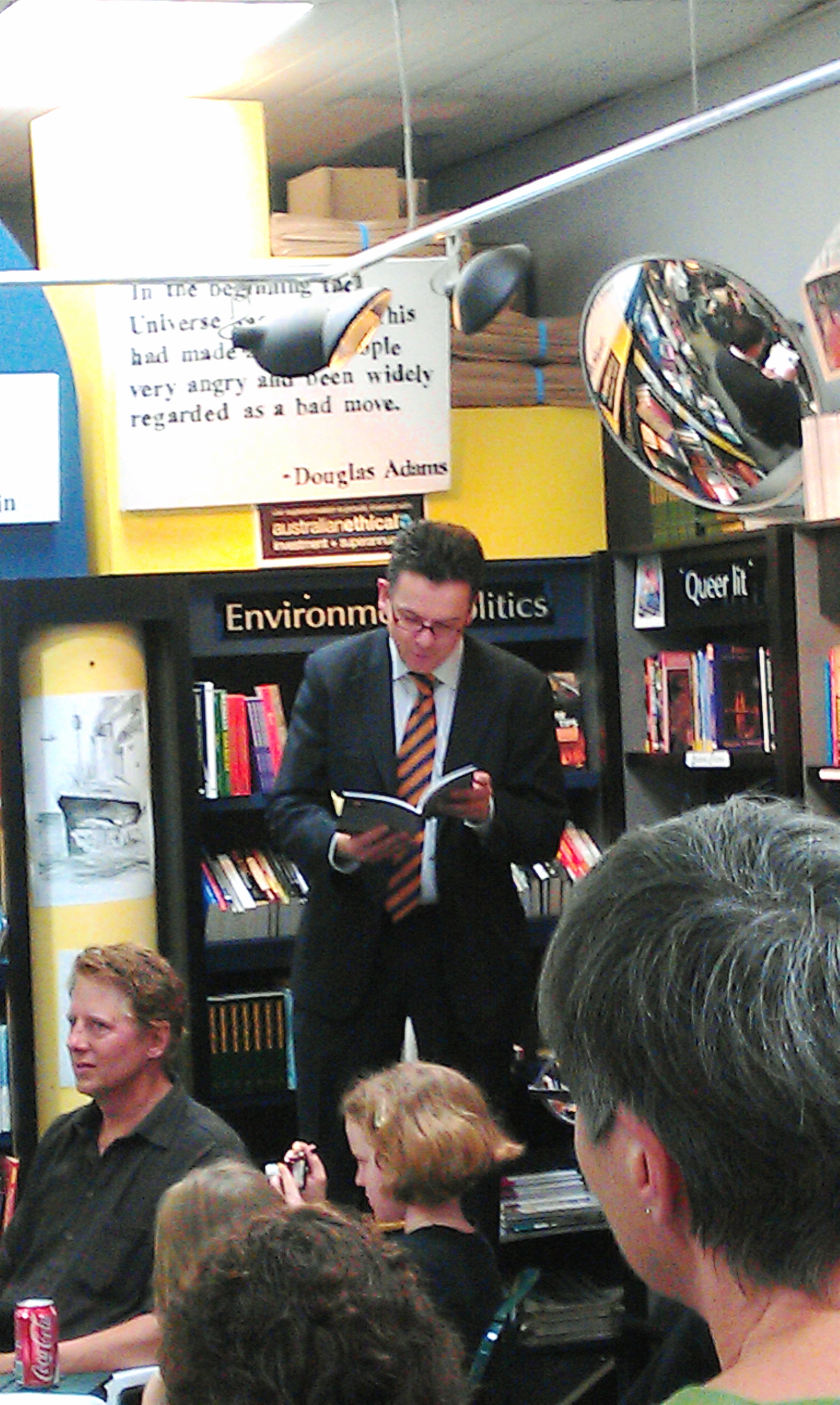
Senator Xenophon takes a gamble
(Thanks Lily Mulholland for this photo.)
If you would like to order the book, please go to this page, within the Ginninderra Press site. The first review of the book, by Professor Peter Pierce in The Canberra Times, describes it as ‘droll, intelligent and varied’, which was a very positive thing to read. And totally right, too! Another reviewer, Michael Byrne, states that ‘It is…love for (and embracing of) the different that seems to define Cottier as a poet.’
And in the book’s first international recognition, New Zealand poet and man of letters Tim Jones describes The Cancellation of Clouds as an ‘Australian poetry collection with a distinctively wry yet dark tone and very effective use of long stanzas and densely packed lines.’. All very gratifying, especially hearing I’m more dark wry than white bread…
***
Now I return you to the real piece that bears the title given above. I originally wrote what follows below back on January 22, 2009, and it still seems a good inclusion for my blog, although I notice a recent trend to write a little more often here than I did originally. For a long time this was the first post the reader saw on my blog, and I only recently allowed it to move away from its ‘sticky’ position on the first page.

 Cicadas and tortoises. And poetry?
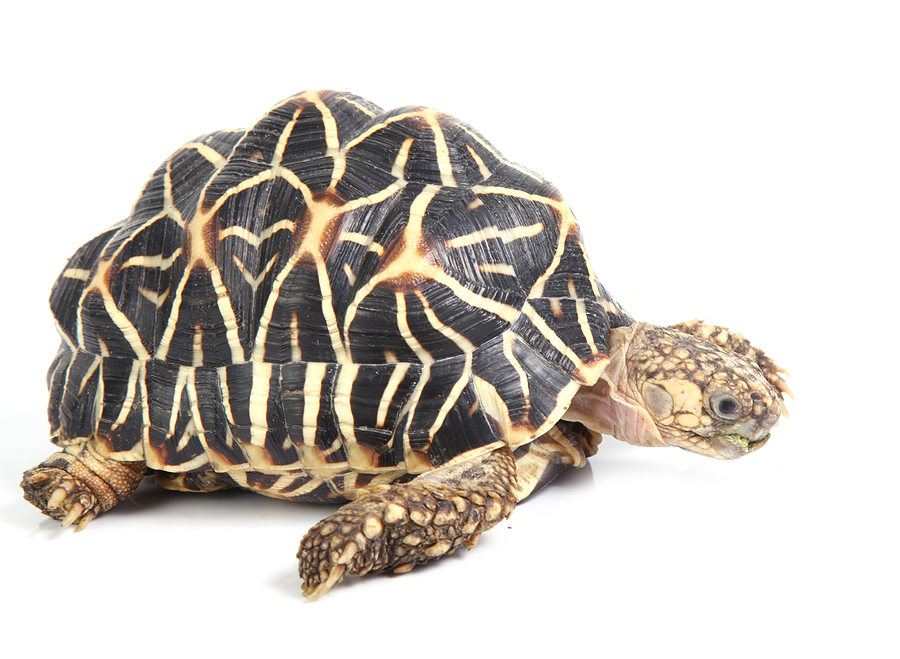
In my case, cicadas and tortoises seem apt metaphors for the process of writing. My first book, The Glass Violin, a poetry collection, has just been published by Ginninderra Press. Some of the works in the collection go back twenty years, so the easy option of comparing myself with a tortoise comes to mind. There’s nothing like a good old shell of cliché in which to hide an idea.
Yet I actually write quite quickly. I’ve just been a shocker about trying to have my work published. About a year ago I decided to put an emphasis on seeking publication, and I have been quite fortunate in finding places that liked my work.
Cicadas spend most of their life underground, only emerging after years and years to produce an ear-splitting cacophony. They only live a short while after emergence. As a practising poet, I feel a lot like one of these insects, pushing through editorial mud, but hopefully the process of publication has just begun. I wrote this poem about the vocabulary used for referring to poets as emerging, developing and established:
Emerging poets
White, shovel-shaped finger-nails,
rotten smell, the world’s worst bulbs.
Like durian fruit mushrooming,
zombie poets emerge, pushing
through editorial soil, groaning,
after a decade’s slushy stew.
Perhaps some emerge politely,
quaint chicks toothing oval eggs.
Others make neat papier mâché
cocoons from rejections, wait,
then one day, poof! Harlequin
wings, trembly antennae. Most
are born bogongs, banging on
bright lit windows. Any more sir?
(I like to think that my poetry is a little more melodic than the noise of a cicada, although this example is admittedly a little less than elegiac. Incidentally, all poems on this site are by me, unless otherwise indicated.)
This will be a very occasional blog, as this cicada prefers to work on her poetry. It’s always a temptation to bury yourself away, once the soil has been so very comfortable for so long…

I was very happy to read this review. And this one, too.
And since then, a second book, this time a short collection of short stories:

Both can be ordered from Ginninderra Press, under poetry and fiction respectively.
100 stories for Queensland
April 30, 2011
What a year for disasters. New Zealand, Japan, the recent storms in the United States, and, of course, the catastrophic floods in Queensland. There are probably many more too, but these four are the ones I’m most familiar with, perhaps because they happened in developed countries, which tend to get more attention in the media. But wherever such events occur, the suffering is undeniably real. And to have a disaster in one’s own country means a certain responsibility to help in some way rests on those who were not affected.
I am very proud to have a tiny story called ‘Beating creativity’ (so flash, if you blink, you’ll miss it) in the book 100 stories for Queensland, which will raise funds for the Premier’s Flood appeal. The book will be launched on 3rd May, and will cost $19.99, and you should be able to order it through your local bookshop soon after that. Or you will be able to go here to find out how to order the book electonically, as a hard copy or an ebook. Here is some more information about the project, from the home site:
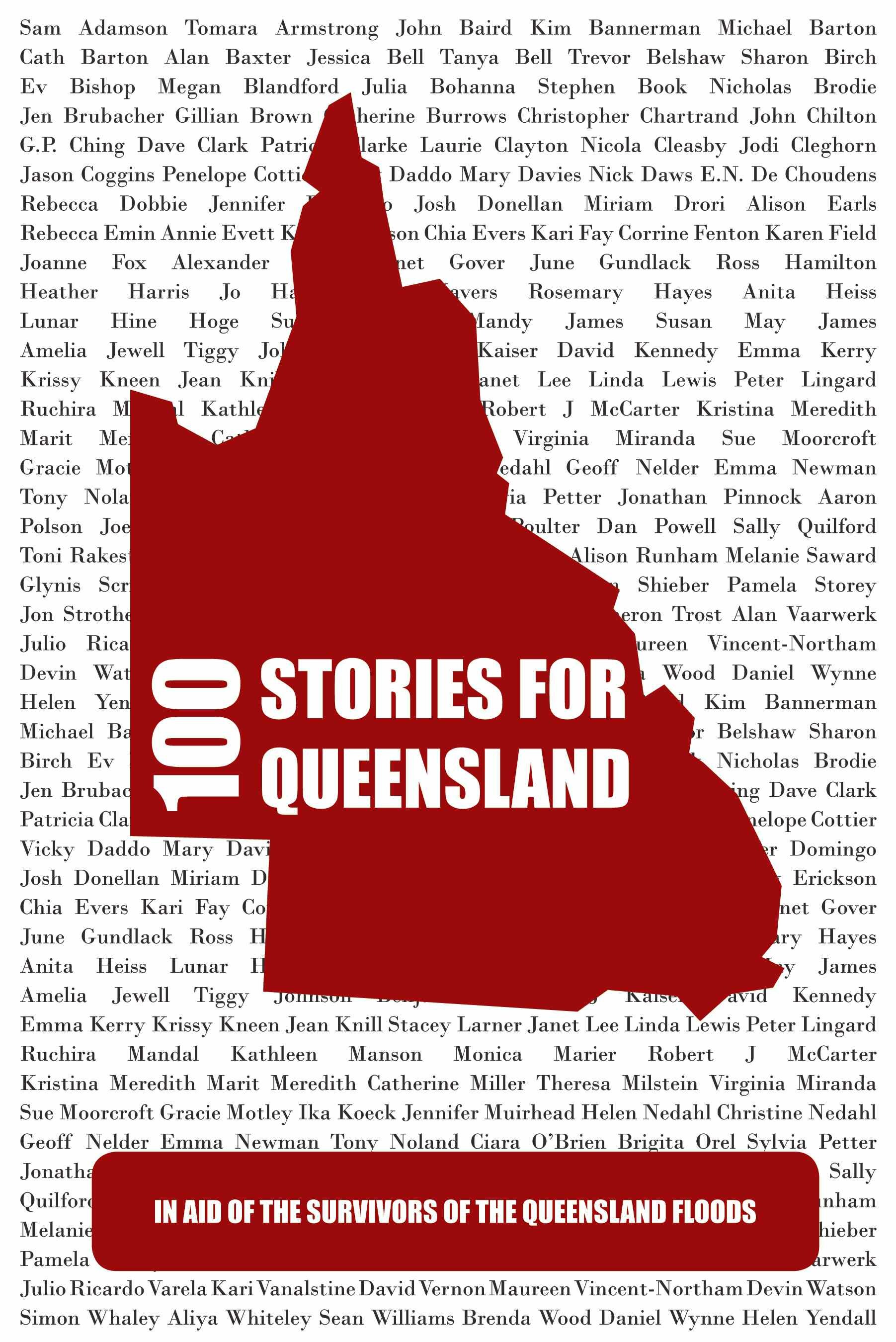
“One hundred beautiful stories. Our stories. When so much was lost or destroyed, this was created. That’s something that can never recede or wash away.” ~ Kate Eltham
CEO of The Queensland Writers Centre
100 STORIES FOR QUEENSLAND has something for everyone, from slice of life to science fiction, fantasy to romance, paranormal to literary fiction. Heart-warming, quirky, inspiring and funny the stories between these covers will lift readers to higher ground.
ISBN (Print): 978-0-9871126-2-0
ISBN (eBook): 978-0-9871126-3-7
Pages: 316
Dimensions: 229x152mm
RRP: A$19.99, US$19.99, ₤9.99, €9.99
UPDATE: There will be a slight delay with the hard copy. Best to go to the 100 stories link in the blogroll (or here) for further details. The hard copy book can now also be ordered from Amazon.
The best thing about writing a blog…
January 28, 2011
…is that you can post poems or stories that you know would be rejected from serious poetry journals. This little piece (not a story, certainly not a poem) deals with the Antipodean writer seeking publication in a Very Serious American journal. It’s partially based on fact: I had one editor tell me that while international submissions would be accepted for a competition, he didn’t encourage them, as some of the publisher’s books once went astray in Asia. A broad geographical area that presumably includes Australia. Needless to say I didn’t enter that competition. (Most US journals/publishers are much better than this, by the way.)

Smart and Serious
‘Be professional, patient and persistent’
Advice given on Duotrope’s Digest web-site
Three communications received from Smart and Serious: America’s premier journal of the literary short story and of avant-garde poesie by Ms Felicity Quillpien, writer (retired) of Sydney, Australia.
1-2-2011
Dear Ms Quillpien,
We love your story! It deals with the essential paradoxes of the human condition in an elegant and thought-provoking way. I particularly enjoyed the way you played with notions of gender throughout your story. Your style rivals that of Jane Austen and the description of the house of endless rooms is positively Kafka-esque! Congratulations!
However, Smart and Serious is a literary journal, and we are therefore unable, under any circumstances, to publish science fiction.
I suggest you submit to a genre magazine, if such pulpy things exist outside of my worst nightmares.
Yours sincerely,
Roland K Roland
editor
P.S. We are unable to return the manuscript, or your attractive ornamental tokens (‘IRCs’ whatever they may be) due to your disregard for our instructions that adequate postage be attached to a self-addressed envelope.
2-1-2011
Dear Ms Quillpien,
Sincere praise for your new story. I am glad to see that you have jettisoned any suggestion of the future, adventure, humor (note spelling, please) or the possibility of a life in any way different from that currently lived in North America (excluding Canada). The lack of any verb in the first ten paragraphs struck me as particularly conducive to engendering a feeling of contemplation on behalf of the more sensitive reader of our peerless feuilleton.
I was about to mail the acceptance letter, when I noticed you live in Australia. Smart and Serious does not accept stories translated from the original, although we often favor (spelling) the French language in our use of English. We find it adds a certain Proustian quality, the soft pas of a boulevardier, the frou-frou of dresses and the enchanting smell of the salon, would you not agree?
I suggest you submit to a German language literary journal, if such boldly Teutonic things exist.
Yours sincerely,
Roland K Roland,
editor
8-3-2011
Dear Ms Quillpien,
Thank you for your enquiry about submitting to Smart and Serious‘s first ever short story competition. I answer your rather curt questions and complaints in turn:
1. Payment must be made by check. (Please check your spelling before even considering further communication. Last I heard, a cheque was a type of European to be found quite close to Australia’s borders.)
2. I am sorry that a check for $15 US costs so much to arrange in Australia. May I suggest that a change of venue might be in order? Smart and Serious, as a literary journal, can hardly concern itself with the realities of international commerce, politics, or economics. ‘Countries may come and go but soft Literature is forever/ She slides through crepuscular mornings like a feline snail.’ (Copyright, Roland K. Roland, from Stanza 58 of my ‘Thoughts for Twilight Mornings’, forthcoming in next month’s Smart and Serious.)
3. Cash is not acceptable. It would lower the tone. Your suggestion that ‘money is money and at least the dollar speaks clearly’ does not bode well for any story that might be about to spring from your marsupial pen.
4. Electronic submission is similarly vulgar. If we embraced technology, next we knew, we’d be publishing science fiction! God only knows where that might lead!
I hope that this helps you in your admirable if rather surprising intention of submitting an entry (English original only, danke) to Smart and Serious. We like to think of ourselves as literary missionaries, bringing culture to the world. The world can only learn from the American literary journal, of which Smart and Serious is the exemplar, par excellence.
As I have been busy lately, I am afraid that the closing date for the contest has already passed. As the French put it, Temps fugit! Perhaps you might consider an entry in next year’s contest instead?
Yours sincerely,
Roland K Roland,
editor
 PS Cottier