Tuesday Poem: Up
February 15, 2016
Up
To look up from cracks
to see two joined
fifty years by love,
cemented into couple,
completed by time;
To feel sudden sun’s lick
render you gerbera,
face stroked by light petal
eight minutes old
caressed by time;
To see dog raise hairy flag
of flesh and wag
a fan in smell-poem air,
simple and clear,
careless of time;
is joy.
P.S. Cottier
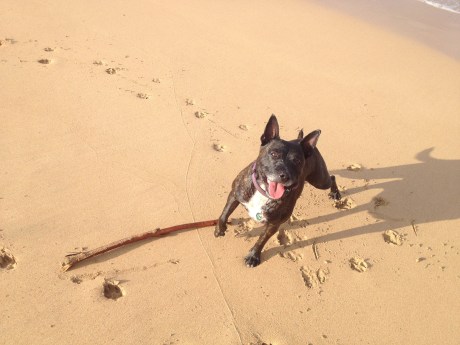
I wrote this ages ago and can’t remember if it’s been published. Not on My List, so probably not! (My List is all the publications and awards I’ve had, and is a kind of memoir. But listier and with rather less angst.)
A simple poem with a bit of repetition for those who like that sort of thing. The dog in the photo likes the same line of poetry being thrown out again and again. We’d call it a stick.
Click this link to see which poets are posting on Tuesdays.
Tuesday poem: Heron’s formula
February 8, 2016
Heron’s formula
A lesson in trigonometry,
the white heron forms triangles
with legs as she inches forward
< obtuse, acute, obtuse >
and reeds write the shape’s third side,
grass and leg linked by my needy eye.
Each retraction from stillness
seems a matter of regret;
a fall from Greek statue
into hungry, stalking GIF.
Silent as a wish, she moves
towards the modest,
root-dwelling fish.
A split triangle
wedged into head axes down,
teaching the dumb water
a critical formula: working an equation
on softer bodies.
Heron swallows, then cries triumph,
and the noise is the croak
of a thirty-a-day frog
krarkkrarking imperfection —
a broken kaleidoscope of notes —
a pocket full of clashing change.
The breath of the eager teacher
who tried to show me the
dubious wonders of triangles,
to draw them on my brain,
swings into memory
with a scalene sharpness.
Sound conjures smell;
ear and nose separated only
by a stretched vinculum of years.
Angel microbes swarmed
in his every exhalation,
armed with gleeful mallets
for playing smell croquet —
sulphur tapped through nostrils —
blunt, yet sharp and jangling.
He could not know that
he was Alice with stink flamingos;
heroic feathers tickling
before, and after, each own goal.
How could I breathe and think
under such an unnumbered cloud?
A limp fish, I soon failed.
The elegance of herons
undercut by noise;
the perfection of mathematics
negated by disgust.
I paddle off, towards firm ground,
away from the sharp, white assassin,
and the chopped pools of recollection.
P.S. Cottier
This poem was just commended in the World Wetlands Day Poetry Prize, judged by Sarah Day, so I thought it would be nice for people to be able to read it. The winning poems are posted at the link, and very good they are too. The site itself is as cool as a rockpool and thrice as pretty.
This is an unusual poem for me in that it combines the natural world and memory and mathematics. I am innumerate, so the maths is the most freaky part. The poem recalls someone being turned off the so-called Queen of the Sciences for life. Sometimes the division between authorial voice and real author is pretty swampy.
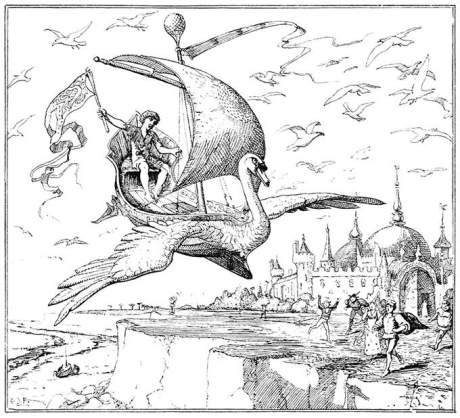
Heron’s formula has something clever to do with triangles, I think. Personally, I am satisfied that the sail on the swanboat in the picture above is a most definite triangle. I passed Shapes at kindergarten with flying colours.
Click this link to see which other poets are Tuesdaying.
Tuesday poem (or notes towards one!): A Great Perhaps revisited
January 25, 2016
A Great Perhaps revisited
the fantastic maybe
the I can’t believe it’s not heaven
the Ladbroke Lad’s uncertainty principle
the cliché feline done to death (and not done to death)
Rabelais lays down a beauty
the Artful Dodger’s silent handkerchief that never ends
caught in a pun, she giggled internally —
Pantagruellingly —
any more sir?
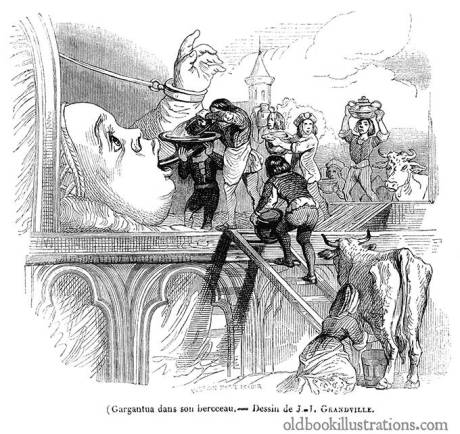
Baby likes ideas
So François Rabelais, author of Gargantua and Pantagruel, allegedly uttered the words ‘I go to seek a Great Perhaps’ on his deathbed. One thing for sure is that he loved a good rude joke and a spirit of anarchic fun pervades his works. I am playing with puns and physics and farts and different ways of envisaging heaven in the above. Dickens is dragged in too, although I do not think that any of his characters ever farted, even on a deathbed.
Far too much for a Lilliputian poem, but I rather like glutting on ideas from time to time.
Next week things will make more sense. That’s a promise. Peut-être.
Tuesday poem (early!): Two containers
January 10, 2016

The two items above are the subject of the following poem, written at the Green Shed in Civic, which is a store selling items mainly found at Canberra’s tips. Late last year, as part of the Design Canberra festival, punters were asked to write a response to objects at the Green Shed. I was the first to have a go, and set myself a ten minute limit. Here’s the poem, with just a couple of typos corrected:
Two containers
Black rectangle of leather,
simple silver clasp. You smell
of clean secrets, of transparent glue,
or a genie addicted to soap.
Gold lettering spells ‘Lodge Elata’
but your elation long fled the bag.
She searches for crumbs, carolling.
Banana jug — cracked as if you were
yourself a punchline — jagged haha
or an inappropriate smirk,
yellowing a funeral with muted glee.
Three bananas. Two are thick lips,
and one a self-tasting tongue,
enjoying the flavour of milky jokes.
P.S. Cottier
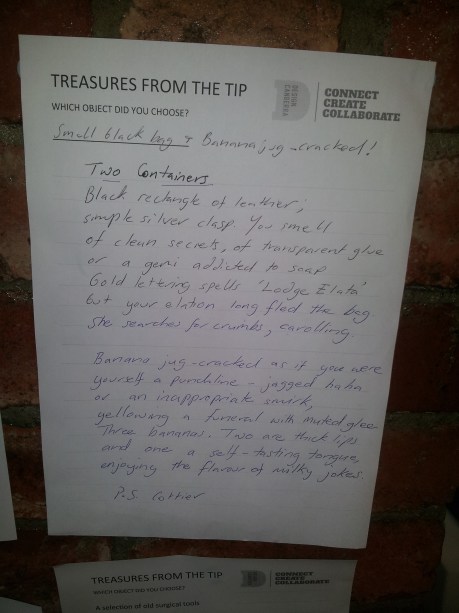
The masonic bag did become transparent after the poem was written, in the sense that I hear that someone stole it from the shop! Not a genie, either. Or so I suppose.
Thanks to Kaaron Warren for alerting me to this event.
And happy 2016!
Press this link to see what other poets have been doing. (Check out the sidebar.)
Ring out, wild bells by Tennyson
December 22, 2015
Ring out, wild bells, to the wild sky,
The flying cloud, the frosty light:
The year is dying in the night;
Ring out, wild bells, and let him die.
Ring out the old, ring in the new,
Ring, happy bells, across the snow:
The year is going, let him go;
Ring out the false, ring in the true.
Ring out the grief that saps the mind,
For those that here we see no more;
Ring out the feud of rich and poor,
Ring in redress to all mankind.
Ring out a slowly dying cause,
And ancient forms of party strife;
Ring in the nobler modes of life,
With sweeter manners, purer laws.
Ring out the want, the care, the sin,
The faithless coldness of the times;
Ring out, ring out my mournful rhymes,
But ring the fuller minstrel in.
Ring out false pride in place and blood,
The civic slander and the spite;
Ring in the love of truth and right,
Ring in the common love of good.
Ring out old shapes of foul disease;
Ring out the narrowing lust of gold;
Ring out the thousand wars of old,
Ring in the thousand years of peace.
Ring in the valiant man and free,
The larger heart, the kindlier hand;
Ring out the darkness of the land,
Ring in the Christ that is to be.
Alfred, Lord Tennyson (from ‘In Memoriam A.H.H.’)

I would have sworn that I had posted this before, but I can’t find it. Doesn’t matter anyway, as it is a lovely piece that deserves frequent reading. The repetition of the word ring is quite remarkable. William Blake is always good, too.
We’re yet to reach the rule of the larger heart or the kindlier hand, and the times seem pretty cold, even here in a very hot Australia. But Christmas is a time to hope for renewal. As is Easter, but let’s not get head of ourselves…
Best wishes to everyone reading, and Merry Christmas from your ex-atheist blogger, as we move towards 2016.

