Stronger than coffee,
the memory of the mandarin
segments the air with tang.
Smell is better than taste
(no pips to spit and
punctuate the saucer…)
Orange air flips a finger
as I sip staid warm brown.
P.S. Cottier
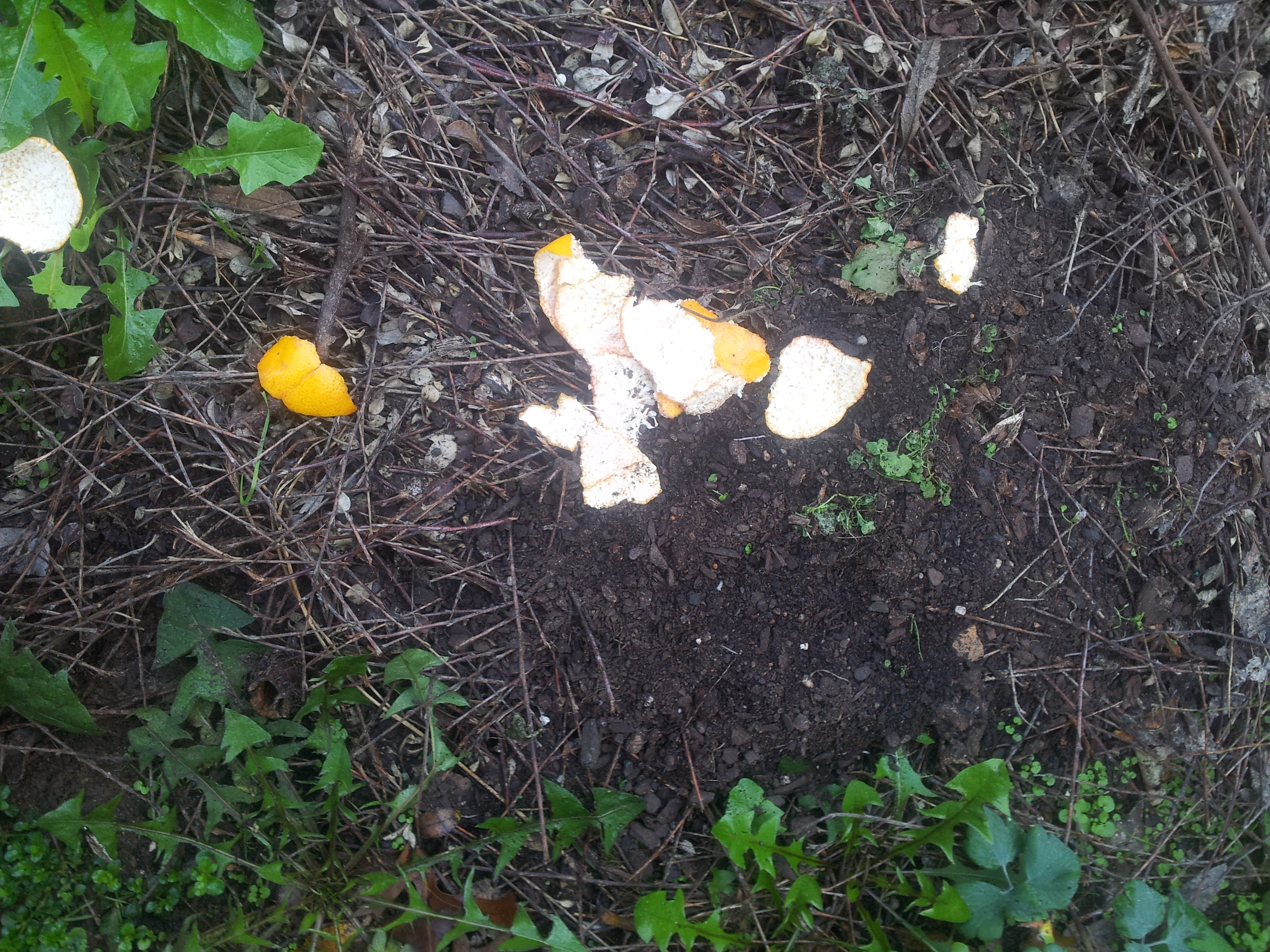
Perhaps I should write a book of poems entirely set in a café, called First World Beverages or somesuch. I just wrote a prose piece, soon to be published, about how annoyed I get with poetry that seems to reject all the world except for the poet and his or her feelings, as if feelings have no connection to the society in which they are felt. Mmm, I must order another coffee and have a think about that…That is my world, I suppose, but there is the occasional idea as well, floating around like the smell of mandarins. (They are healthier than madeleines, too.)
I do quite like the pips as ellipses though, and the hint of concrete poetry as the brackets form a saucer. Poésie porcèlaine sounds so much nicer than concrète, don’t you agree?
I must contact the Trademarks Office.
And just in case you haven’t yet had a coffee:

Enjoy!
Read the works of the other Tuesday Poets around the world by pressing here.
***
Lastly, my pocket book Paths Into Inner Canberra (Ginninderra Press) is now being stocked by Book Lore in Wattle Street, Lyneham (that’s in Canberra). It is on the front counter, so go in and buy one for $4. Keep this deserving woman in coffee!

Book Lore is a fantastic second-hand bookstore, located between two cafés. In one of these establishments, a poem about mandarins and coffee was written, just today. The photo in the helmet was taken outside the second of these places, by a Mr G. Dunn, after wine was had, and is one of several in the wee pamphlet. The pocket book can also be ordered on the publisher’s site using Paypal. (I am number 3, she said, mysteriously.)
For one doesn’t live on coffee alone, and even mandarins may fade.
Paths Into Inner Canberra
April 1, 2015

Here is the cover of the Pocket Book that has just been published by Ginninderra Press of South Australia. God, I am sure that the woman on the cover can ride that bike fast. (I am lying.) The photo was by Geoffrey Dunn, as is the one of the cockatoo below.
The essay inside in bejewelled with poems, and discusses the bikepaths of Canberra, cockatoos, what we mean when we speak of nature, turtles, and has more than a little memoir throughout.
It can be purchased from the woman on the bicycle, or from Ginninderra Press, for $4, plus postage, which will be modest too.

Paths Into Inner Canberra: my next publication
March 6, 2015
I am having an essay published. Yes, in prose, with two bonus poems. This is happening in a wee pocketbook to be called Paths Into Inner Canberra. The publisher is Ginninderra Press, based in South Australia. It is part of a new series they are publishing, called Pocket Places.
In the book, I describe riding a bike through Canberra along the bikepaths, and the wildlife that one can see, such as cockatoos and turtles. It is part memoir, part philosophical reflection (that’s a very little part) and part evocation of aspects of this city that I love.
The lovely photos have been taken by the very clever and cool Geoffrey Dunn. Here is one that the publisher chose not to use, which I quite like.

How do I obtain this wonderful book, I hear you cry? And is it true that it costs only $4?
In answer to your first question, I will post a link when it is available. Or if you see me in Canberra, enquire direct, buy me a coffee (or a beer or wine, if your accountancy skills are delightfully bad) and one will be your own to keep. To quote Willy Loman ‘That is a one million dollar idea.’
In answer to the second: Yes. Plus postage.
I am very happy that this essay is being published, although I should probably call it creative non-fiction, or extended haibun, or something clever. Does anyone write essays anymore?
Remembering 1816: Two hundred years since Frankenstein was conceived
February 7, 2015
Remembering those who gathered in 1816 by the shores of Lake Geneva, along with monsters and vampires
We’d all be Byron, if we could;
titled, desired, trangressive.
What wouldn’t we all give
to write Mary’s monster half as good?
Or to pen Ozymandias,
and find ourselves anthologised,
with the glamour of one who died
as young as PB. There’s a bias
towards such as he, or Jimi Hendrix.
Mary Shelley lived a longish life
but many cast her just as the wife
of genius drowned. As if she were thick!
Yes, in our hearts, we opt for glory.
Pity we’re all Polidori.
P.S. Cottier

Polidori was Byron’s doctor, who accompanied the poet to the villa he rented near Lake Geneva, where he hosted his friends Mary and Percy Shelley.* They read ghost stories and composed their own. Mary came up with the idea for Frankenstein, and Byron wrote a fragment of a vampire novel. Polidori wrote the first full length vampire story written in English. When published it was attributed to Byron, who denied authorship. It is still listed as written by Byron in various catalogues. You can see how keen someone was to attribute it to Byron in the image above!
Polidori has had a bad rap; an anthology of vampire stories I am reading prints not a paragraph of that first novel, on the basis that the author was a ‘hack’. I am also beginning to read his book (The Vampyre: A Tale) and it’s true to say that the prose doesn’t sing:
“THE superstition upon which this tale is founded is very general in the East. Among the Arabians it appears to be common: it did not, however, extend itself to the Greeks until after the establishment of Christianity; and it has only assumed its present form since the division of the Latin and Greek churches; at which time, the idea becoming prevalent, that a Latin body could not corrupt if buried in their territory, it gradually increased, and formed the subject of many wonderful stories, still extant, of the dead rising from their graves, and feeding upon the blood of the young and beautiful.”
My poem above is, to some extent, about our tendency to feed upon the ‘young and beautiful’ after they die, at least.
Poor John Polidori died very young himself, like Percy Bysshe Shelley and Byron. He was best known for who he associated with; a groupie, not a musician. There is some evidence that he committed suicide, but this is controversial.
The poem deals with the way that most writers, whether poets or novelists, far fall short of the Shelleys or Byron, and most musicians are not Hendrix. That does not mean that nothing worthwhile can be written by those ‘silver poets’. It just means that some people seem blessed with an additional talent to take what was around and transform it into something instantly recognisable as new. A glamour, perhaps, to use that word in an old way meaning spell or magic. A blessing is another word that could be applied. Some use the word ‘genius’, and surely that reminds us of something magical, that grants wishes?
Next year is the 200th anniversary of that meeting on the shores of Lake Geneva, and I hope to write a lot about Frankenstein and his monster this year. Let’s praise the genius of Mary Shelley who took scientific ideas of her time and created a profoundly moving tale that examines what it is to be human.
By the way, there was another visitor in Byron’s house in 1816, who is not mentioned in the sonnet; Mary’s stepsister, Claire Clairmont, who had a child in 1817. Byron was the father.
(Public domain image from Wiki Commons.)
*They were married in late 1816, after the famous meeting, but I’ll use the name under which Mary became better known here.
Not so egregiously slack
October 30, 2014
I really have been absent from my blog for about two weeks now, which is virtually unprecedented. ‘Virtually unprecedented’ is a pretentious way of saying I am usually not lazy like that. But I have been busy, judging other people’s poetry.  That image is very dignified, whereas the process is somewhat more fraught. ‘Fraught’ is a slightly pretentious way of saying difficult. The whole issue of judging poetry throws one back to basics: Why me? What makes a poem good? It is easy to spot the bad poems in a Big Pile. They may use obvious rhyme to the extent that a rhyme seems to be the only point of each line. (A bit like that sentence, but even rhymier.) They may dwell too obviously on the poet him or herself (all the poems to be judged are anonymous, of course, so one does not know the gender of the entrant). I actually like some poems in which the process of writing itself is dealt with, if they are amusing or surprising; not if they are turgid or caught up in an unreflective notion of genius. A good poem should surprise and take risks. It should not use the occasional ‘poetic’ word as seasoning for a balefully plain meal. Somewhere between pinch, stroke and slap we find the Good Poem, strutting herself like a green flamingo, all swerve and flap and tingle.
 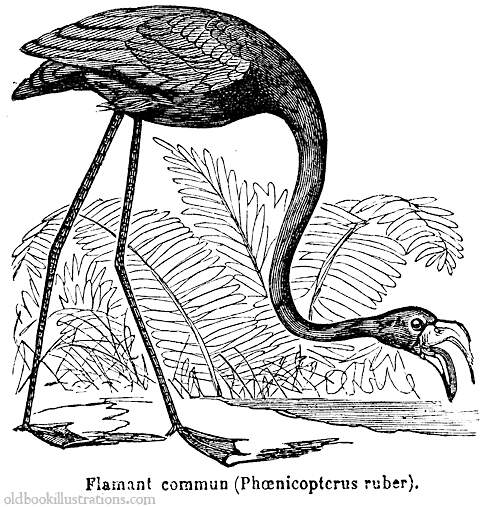 There you have it; a Good Poem describes an unusually feathered tall bird that tastes like sherbet. Having cleared that up, and finished judging a contest in which there were just too many lovely flamingos, I can move on to something different.
***
A very interesting anthology is currently being prepared for publication in 2015. Here are the details: http://www.abhayk.com/p/global-poetry-project.html Abhay K., Indian poet and diplomat, is editing a collection of poems on capital cities. One for each capital city, I think. I just found out that my poem has been accepted for Canberra. This will be the most international publication that I have been lucky enough to be part of, with poets from Tehran to Jakarta to Paris to Lima included, with 196 or so more. Very exciting indeed!
***
I am struggling to find the time to work on assembling a new manuscript of poems. So please, dear reader, forgive the absence of an actual poem here this time. I will remedy that in the near future. Which is a pretentious way of saying keep reading.
 PS Cottier